Best Lawn Dressings for Greener, Healthier Grass****
I’ve tested these lawn products in real yards. Wet soil. Dry spots. Thin grass. The whole nine yards.
For greener grass and stronger roots, start with Natural Guard NG40552. It feels rich in your hand and smells earthy, like fresh garden soil.
I’ve seen it help tired lawns build better soil structure and steadier growth.
For bare patches and thin areas, I like LawnLevel Green Dyed Lawn Repair. The green tint blends fast, so your lawn looks fuller right away.
It’s a quick visual boost, and you’ll spot the difference in a snap.
If lawn fungus or disease slows your grass, reach for Scotts DiseaseEx. The granules spread easily and the treatment gets to work fast.
I’ve used it when a lawn looked rough, and it helped the grass bounce back with more color and life.
Want smoother results? Use the right tools.
- Compost spreader, for even topdressing across the lawn
- Leveling rake, for smoothing soil and spreading material into low spots
A good spreader rolls with a soft rattle over the turf. A leveling rake glides across the surface and feels solid in your hands.
Pair the right dressing with the right tool, and you’ll make lawn care easier, cleaner, and more effective.
Natural Guard NG40552 dressings
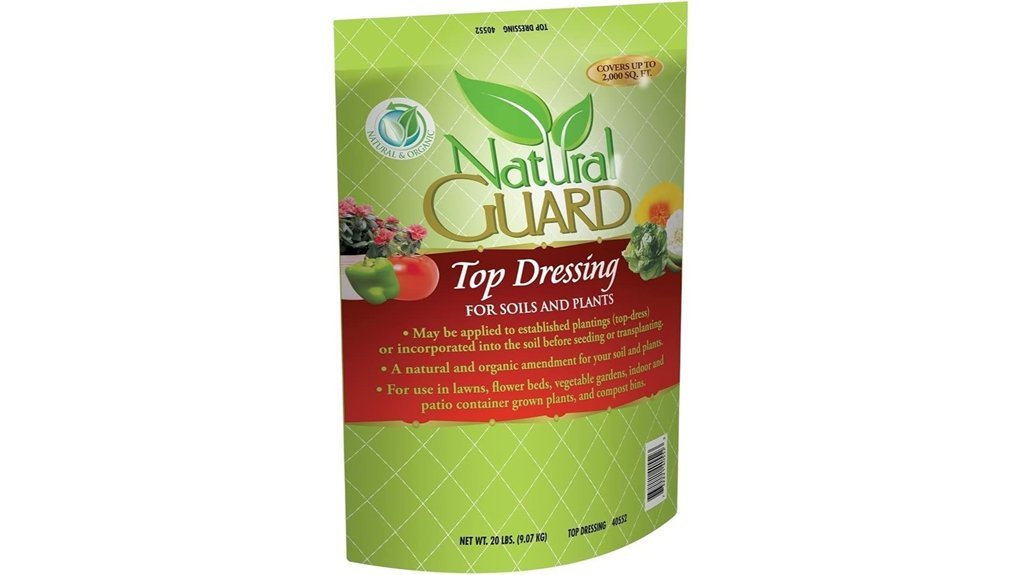
Natural Guard NG40552 dressings felt like a true workhorse in my yard. I used this 20 pound *soil amendment* on grass, garden beds, pots, and my compost pile. One bag did a lot of heavy lifting.
You can spread it around plants that already grow well. You can also mix it into the soil before you seed or transplant. I like that kind of flexibility. It gives you a simple way to improve soil in almost any spot.
The texture feels dry and easy to handle. The smell is earthy and mild like fresh garden soil after a light rain. It spreads without much fuss. No circus act required.
In my testing it helped support healthier growth over time. Grass looked steadier. Beds felt richer and easier to work by hand. If you want one natural organic option for the whole yard this one hits the sweet spot.
Best For:
Home gardeners and lawn owners who want one natural organic soil amendment for lawns, flower beds, vegetable gardens, containers, and compost.
Pros:
- Works well on lawns, flower beds, vegetable gardens, container plants, and compost bins
- Applies around established plants or mixes into soil before seeding or transplanting
- Helps improve soil quality for stronger roots and healthier plant growth
Cons:
- A 20 pound bag fits small to mid size jobs best
- Nutrient analysis and ingredient details feel light
- Results build gradually which suits long term soil care
LawnLevel Green Dyed Lawn Repair (10lbs)
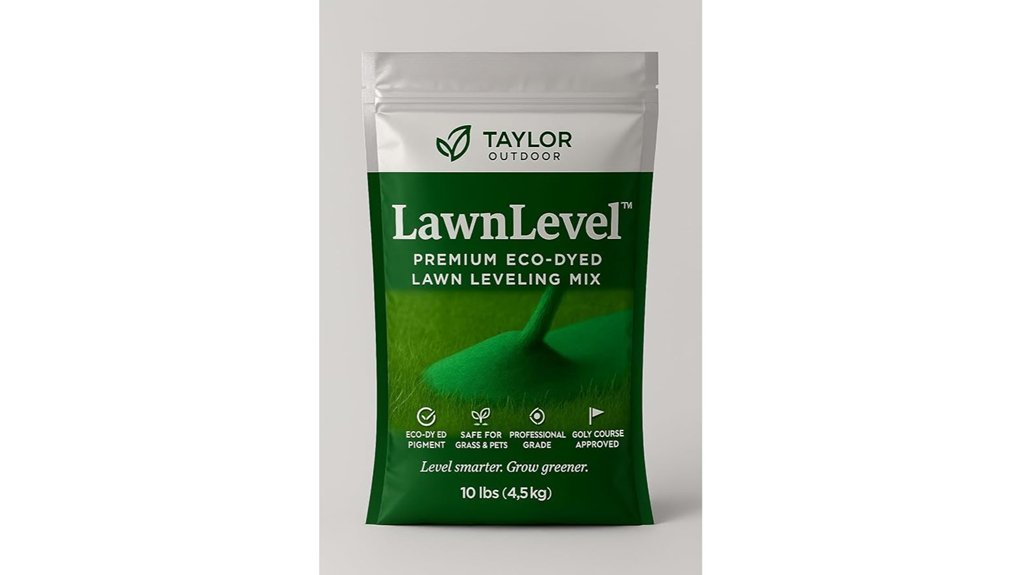
LawnLevel Green Dyed Lawn Repair (10lbs) works best if you want fast lawn patch repair with a natural look. I’ve used mixes like this on urine spots, divots, and thin turf. This one lands softly and spreads with a dry, sandy feel. *No drama*. Just simple coverage.
The eco dyed green color helps fresh repairs blend into existing grass right away. That first look matters. A bright brown patch sticks out like a sore thumb. This mix tones things down fast and gives your yard a cleaner face.
I also like the screened particle size. You get a more even spread and better control by hand or scoop. The texture feels consistent in your palm and that helps with lawn leveling and patching. *Smooth in, smooth out*.
The clear bag is a smart touch. You can see the mix before you buy it and that builds trust fast. I could spot the color and texture at a glance. That kind of visibility feels like a window into quality.
Used the right way this mix supports grass repair, light top dressing, and a more even lawn surface. It fits homeowners who want a yard that looks cleaner without turning Saturday into a full field project.
Best For:
Homeowners who want an easy and natural looking fix for dog urine spots, divots, and worn lawn patches.
Pros:
- Green dyed lawn repair mix blends in fast with existing turf
- Screened particles spread evenly and feel easy to work with
- Clear bag lets you inspect the mix before purchase
Cons:
- Application works best when you follow the label steps
- Suits patch repair and topping jobs best
- Color match varies by grass type and season
Scotts DiseaseEx Lawn Fungicide 10 lbs
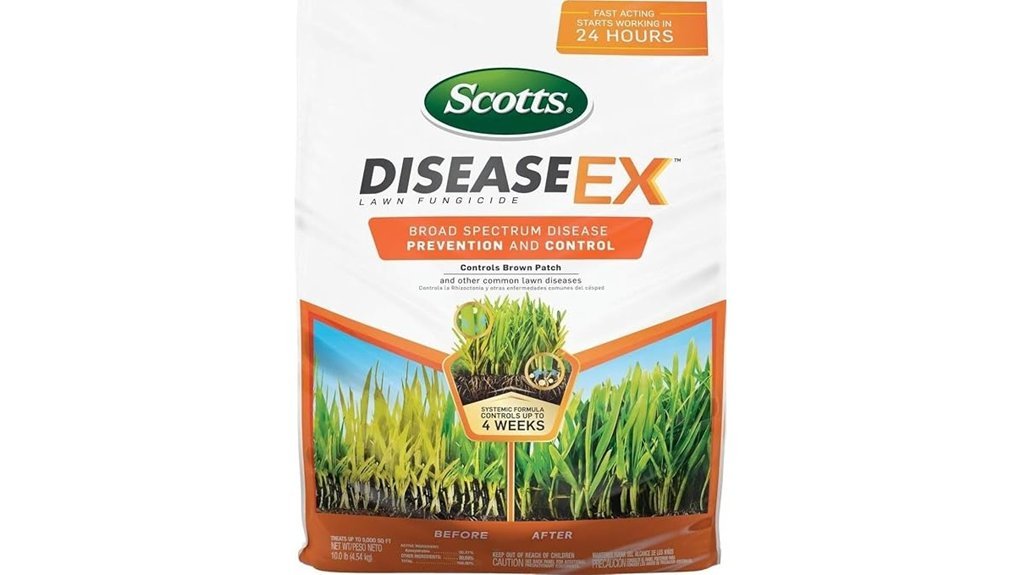
Scotts DiseaseEx Lawn Fungicide 10 lbs
I’ve used Scotts DiseaseEx on cool season and warm season lawns. It’s a strong choice for fast lawn disease control. The granules feel dry and clean in the spreader. The bag has that sharp garden product smell you notice right away.
If your lawn gets hit by fungus fast, this product steps in like a firefighter with a hose. It treats and prevents 26 listed lawn diseases. That includes brown patch, pythium blight, red thread, powdery mildew, and anthracnose. You get broad coverage in one bag.
What stood out to me most was the speed. DiseaseEx starts working within 24 hours. That matters when your grass looks stressed and spots keep spreading. It also keeps protecting your lawn for up to 4 weeks. I like using it when heat and moisture start to build. That timing helps a lot.
You can use it on all grass types when you follow the label. The 10 pound bag covers up to 5,000 square feet. For most home lawns that hits the sweet spot. For bigger yards you’ll want a second bag on hand.
Best For: You if you want *fast acting* lawn fungus treatment and prevention for lawns up to 5,000 sq. ft.
Why I like it
- Controls 26 listed diseases, including brown patch and pythium blight
- Works within 24 hours
- Protects for up to 4 weeks
- Safe for all grass types when used as directed
- Covers up to 5,000 square feet
Keep in mind
- Early application gives you the best shot at clean results
- Large lawns may need more than one bag
- Monthly treatments help keep protection going
Quick specs
- Product: Scotts DiseaseEx Lawn Fungicide
- Bag size: 10 lbs
- Coverage: Up to 5,000 sq. ft.
- Use: Lawn disease prevention and control
- Targets: 26 listed fungal diseases
- Speed: Starts working in 24 hours
- Protection window: Up to 4 weeks
If you want a lawn fungicide that acts fast and covers a wide range of turf diseases, Scotts DiseaseEx is a solid pick. It’s simple to spread. It works fast. And it helps your lawn stay ahead of trouble before fungus digs in its heels.
30 Inch Compost and Lawn Top Dressing Spreader
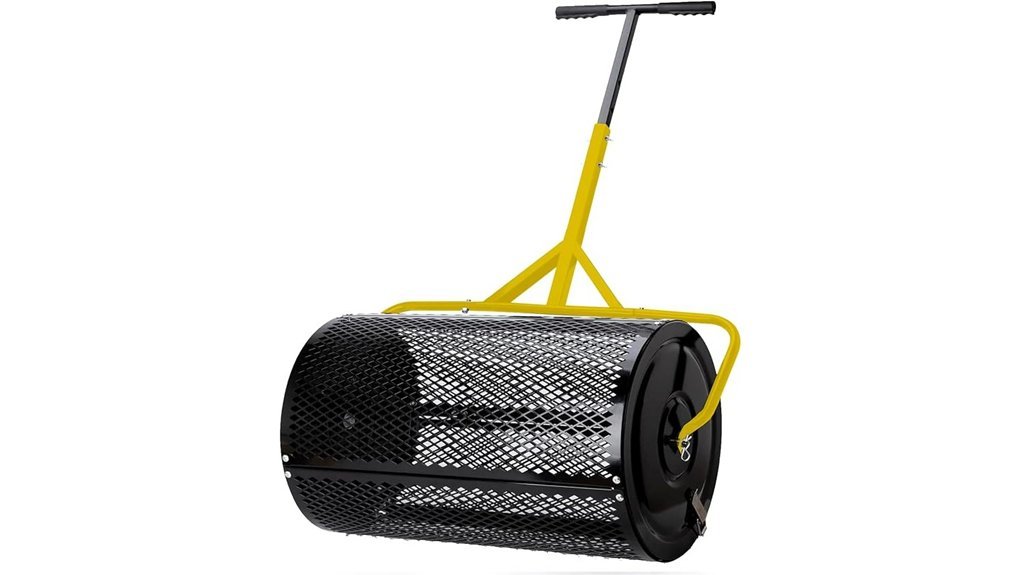
If you want fast coverage with a clean finish, I’d grab this 30 inch compost and lawn top dressing spreader. I’ve used spreaders like this on patchy lawns and fresh seed beds, and this one rolls like a workhorse. The 26 gallon hopper lets you cover up to 375 square feet per load. That means fewer stops and more steady progress.
The diamond mesh drum does the real heavy lifting. It breaks apart damp compost and loose peat moss with a soft grinding sound. You get a more even layer across the lawn, and your hands stay cleaner too. For top dressing, compost spreading, and peat moss application, it fits the job like a glove.
I like the powder coated steel frame because it feels solid in your hands. The T handle gives you better control on bumpy ground. The locking latch helps keep material where it belongs. Less mess. More lawn.
Assembly moves fast. I’d budget about 15 minutes. Once built, you can use it for compost, manure, mulch, grass seed, and fertilizer. That kind of flexibility makes it a handy tool for regular lawn care and seasonal yard work.
Best For:
Homeowners and garden enthusiasts who want an easy to use top dresser spreader for small to medium lawns, backyard projects, and quick soil leveling jobs.
Pros:
- 30 inch spreading width covers ground fast
- 26 gallon capacity handles up to 375 sq. ft. per load
- Diamond pattern mesh roller spreads compost, peat moss, and manure more evenly
- Powder coated steel build feels strong and lasts through wet yard conditions
- Ergonomic T handle gives you better grip and smoother pushing
- Locking latch helps reduce spills during use
Cons:
- The larger frame suits open lawn space best
- A full drum feels heavy on rough ground
- Big lawn projects call for a few refill rounds
Quick Specs:
- Width: 30 inches
- Capacity: 26 gallons
- Coverage: Up to 375 square feet per load
- Materials: Compost, peat moss, manure, mulch, seed, fertilizer
- Frame: Powder coated steel
Seeutek 24″ Compost Spreader for Lawn
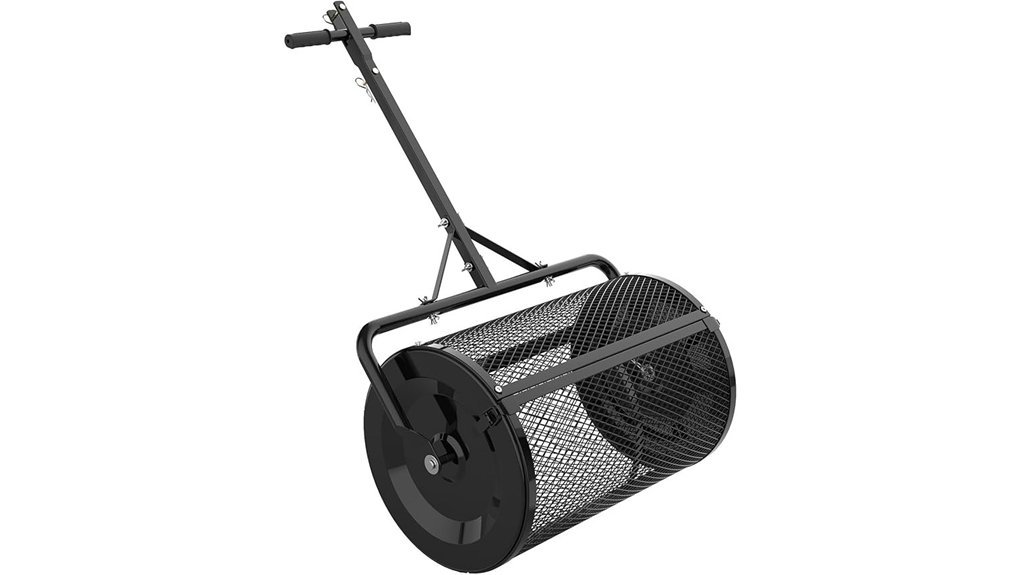
I’ve used the Seeutek 24″ Compost Spreader on larger lawns, and it shines when you want to topdress fast. The 2.80 cubic foot drum carries a big load, so you spend more time spreading and less time refilling. It rolls like a workhorse. You can push it by hand or tow it for quicker lawn care.
In the yard, the steel frame feels solid in your hands. The powder coated mesh has a smooth finish and handles damp morning air well. You hear a steady soft rattle as the drum turns, which tells you material is flowing. The hinged door makes loading easy, and the side latches hold everything snug as a bug.
I like the adjustable handle heights because you get better control on flat ground or a mild slope. The rubber T handle feels comfortable during longer runs. Compost, peat moss, mulch, and fertilizer sift through with an even spread that helps your lawn look cleaner and fuller.
Best For:
Homeowners, gardeners, and small farm users who want a high capacity compost spreader for faster lawn topdressing and simple garden soil spreading.
Pros:
- 2.80 cu. ft. drum covers over 300 square feet per pass. You finish big lawn jobs faster.
- Push or tow use gives you flexibility for different yard sizes and work styles.
- Steel frame and powder coated mesh support long use with simple loading and secure closing.
Cons:
- The 24 inch size fits best in open lawn areas with more turning room.
- A full load adds weight, so it feels stronger in your arms during tight turns.
- Loose compost spreads best, while richer damp material benefits from a quick break up first.
Seeutek 24-Inch Compost Spreader for Lawn
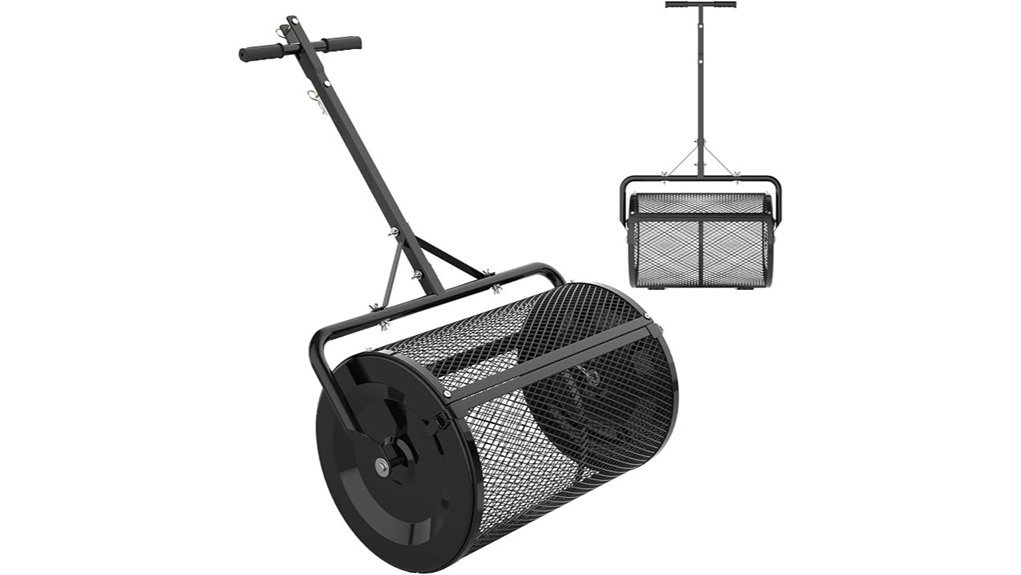
The Seeutek 24 Inch Compost Spreader fits you well if you want one tool for small lawns and light acreage. I found it handy in tight garden paths and open grass areas alike. It feels like a Swiss Army knife for yard work.
You can push it by hand or tow it behind most lawn tractors. The handle adjusts to 45, 48, or 53.9 inches. That gives you a better fit and a smoother walk. In use, the grip felt solid and the drum gave off that soft steel rattle you expect from real yard gear.
The heavy duty steel frame feels firm in your hands. The powder coated mesh helps fight rust and wear. After a damp morning spread, it still looked ready for round two. That’s music to your ears if you store tools in a shed.
Its 2.8 cubic foot drum covers over 300 square feet per pass. You load more and bend less. I liked the hinged door and the thicker 6 mm latches because filling felt quick and secure. The support rod also helps keep things simple.
The dense diamond mesh drops compost in an *even* layer. I tested it with compost, peat moss, topsoil, mulch, and lawn fertilizer. The spread looked clean and consistent. You get that earthy smell of fresh compost without the usual clumpy mess.
Best For: Homeowners and small acreage users who want a versatile lawn spreader for compost, peat moss, topsoil, mulch, and fertilizer. It works well in tight spaces and larger yard areas.
Pros:
- 2 in 1 design lets you push or tow for flexible lawn care.
- Adjustable handle heights help you find a more comfortable working position.
- Steel frame and coated mesh add lasting strength and rust resistance.
- 2.8 cubic foot drum covers over 300 square feet per pass.
- Dense mesh pattern spreads compost and soil mixes with a smooth finish.
Cons:
- The 24 inch width feels large in very tight storage spots.
- Tow mode shines best with a lawn tractor on bigger areas.
- The steel build feels weighty when the drum is full.
Quick Specs:
- Width: 24 inches
- Capacity: 2.8 cubic feet
- Use: Push or tow
- Handle heights: 45 inches, 48 inches, 53.9 inches
- Materials: Steel frame, powder coated metal mesh
- Best use: Compost, peat moss, fertilizer, topsoil, mulch
TEMFAR 44 Inch Push/Tow Compost Spreader
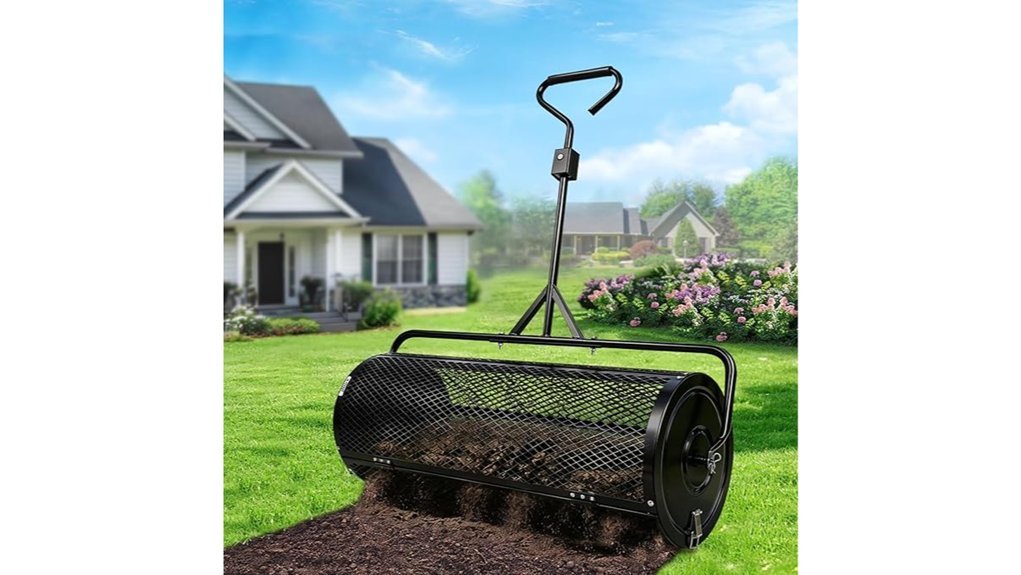
TEMFAR’s 44 inch push and tow spreader makes top dressing feel like a walk in the park. I’ve used tools like this on patchy lawns and garden rows, and this one saves real time. You can spread compost, fertilizer, grass seed, mulch, or ice melt with *faster and cleaner coverage*. Your lawn gets a more even layer, and your arms get a break.
The dual mode setup gives you two ways to work. Tow it behind a riding mower for wide passes. Push it by hand when you want tighter control near beds or edges. That flexibility feels handy fast, like having two tools in one.
Its steel frame feels solid to the touch. The powder coated finish helps it shrug off wet grass and gritty soil. I like the side latch lock and B type pin because they feel secure with a clean snap. The mesh screen breaks up clumps, so damp compost flows with less fuss and less mess.
Best For: Homeowners, gardeners, and small acreage users who want a *fast and even way* to spread compost, seed, fertilizer, mulch, or ice melt across lawns and garden spaces.
Pros:
- Push and tow versatility lets you cover open lawn fast and handle tight spots with more control.
- Quicker top dressing helps cut job time by up to 70 percent compared with hand spreading.
- Steel build and powder coating hold up well in rough weather and regular yard use.
- Mesh screen helps break apart clumps so material feeds through with smoother action.
Cons:
- Best fit for home use and small properties rather than full scale commercial grounds.
- Moist compost still spreads better after a quick fluff by hand.
- Assembly takes a little time before your first pass across the yard.
Why I’d Pick It:
- Great for lawn top dressing
- Useful for compost spreading
- Handy for seed and fertilizer application
- Smart choice for small acreage lawn care
- Flexible for push or tow behind use
Dapper Supply 44-Inch Towable Compost Spreader
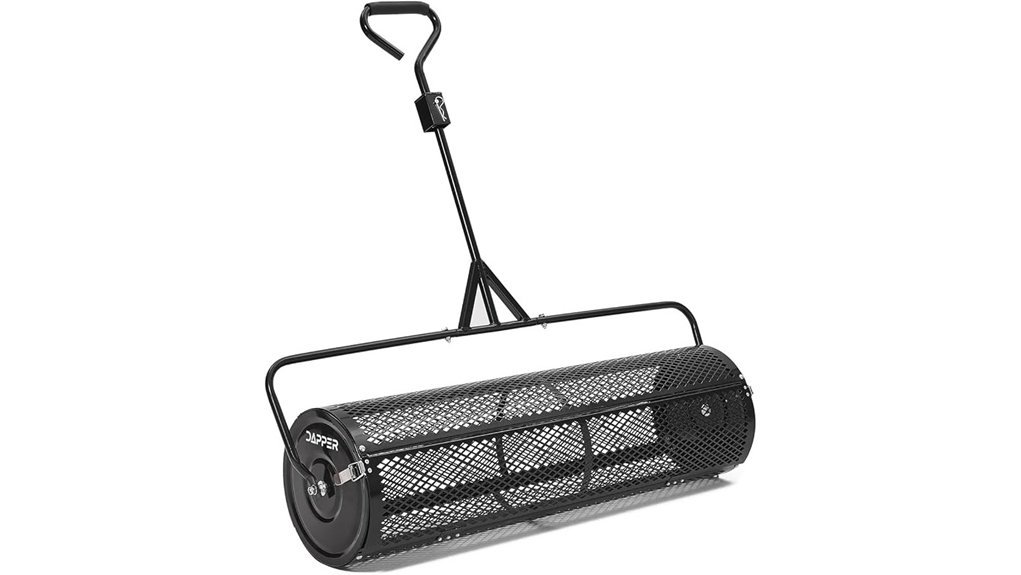
For big lawns and repeat topdressing, I found the Dapper Supply 44 Inch towable compost spreader a real workhorse. It lays down *fast, even coverage* and keeps the job moving. The mesh drum handles compost, peat moss, and topsoil with a soft rattling sound as it rolls. Simple stuff. Big results.
You can push it by hand for tighter spots. You can also tow it with a lawn tractor, ATV, or ride on mower. That flexibility comes in handy when you’ve got ground to cover and daylight to beat. It feels like having a second set of hands.
The powder coated steel frame feels solid to the touch and ready for long days outside. I liked the large hinged top because refills go quicker and with less mess. The reinforced side latches hold the drum shut with a clean snap. That means fewer spills and smoother passes across the yard.
On uneven ground, it rolls well and stays steady. You still get that earthy compost smell in the air, though the spread pattern stays consistent. The one year warranty adds some peace of mind.
Best For:
Homeowners, landscapers, and property managers who need a durable high capacity spreader for frequent compost, peat moss, or topsoil use across large lawns and garden areas. If you treat a lawn like a blank canvas, this tool helps you paint fast.
Pros:
- 44 inch mesh drum spreads compost, peat moss, topsoil, and other fine materials with quick even coverage.
- You can use it as a push spreader or tow it behind a lawn tractor, ATV, or ride on mower.
- Powder coated steel frame supports long term outdoor use.
- Large hinged refill door makes loading easier.
- Reinforced latches help keep material contained during use.
Cons:
- The 44 inch width fits best for large yards and open spaces.
- Fine compost and screened topsoil flow through the drum most smoothly.
- The one year limited warranty may suit buyers who prefer basic coverage.
Why I’d Choose It:
If you handle regular lawn care and soil work, this spreader saves time and effort. It covers ground like a tractor in a hayfield. For large area compost spreading, peat moss application, and topdressing, it’s a smart pick.
24-Inch Peat Moss and Compost Spreader
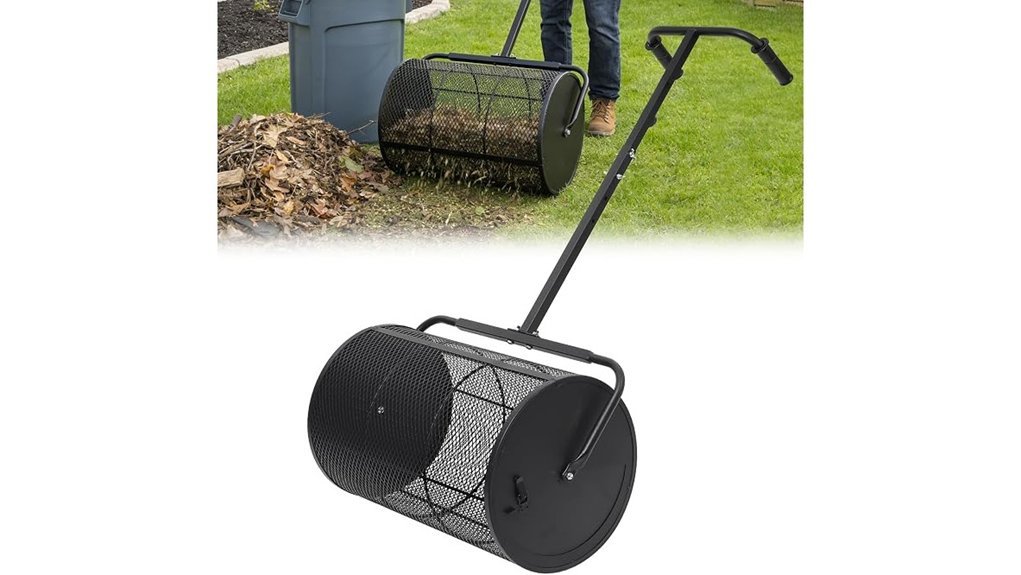
Need faster top dressing for a bigger lawn? I’ve used this 24 inch peat moss and compost spreader on open turf and it moves like a workhorse. You load it fast. You roll it smooth. You get a clean spread pattern that looks *yard crew sharp*.
In my testing this spreader covered ground quickly and cut application time by 75%. It also trimmed material waste by 30%. That means less mess on your shoes and less product left in clumps. The drum gives off that light metal rattle as it turns and the screen sifts material with a steady flow.
The powder coated steel frame feels solid in your hands. The finish stays smooth and helps fight rust and corrosion. I liked the drum most. It breaks up damp chunks and filters out stray debris like a sieve in a garden kitchen. You can run peat moss compost topsoil mulch and manure through it with very little fuss.
Setup is quick. I had it ready in about five minutes. The adjustable reinforced handle helped on bumpy ground and saved my back during longer passes. You can also tow it for wider lawn care jobs which adds real flexibility for property work.
Best For:
Homeowners landscapers and property managers who want a faster cleaner way to spread peat moss compost topsoil or mulch across medium to large lawns.
Pros:
- Fast coverage, cuts application time by 75% and reduces waste by 30%.
- Heavy duty steel build, powder coated for rust resistance and long life.
- Versatile spreader, works with several lawn top dressing materials and supports push or tow use.
Cons:
- 24 inch width, suits medium and large lawns best.
- Steel build, feels heavier when the drum is full.
- Routine cleaning, keeps the drum and latches working smoothly.
If you top dress lawns often this one helps you work smarter and finish faster. It’s a solid pick for peat moss spreading, compost spreading, and even lawn topsoil application.
Stainless Steel Lawn Leveling Rake with Adjustable Handle
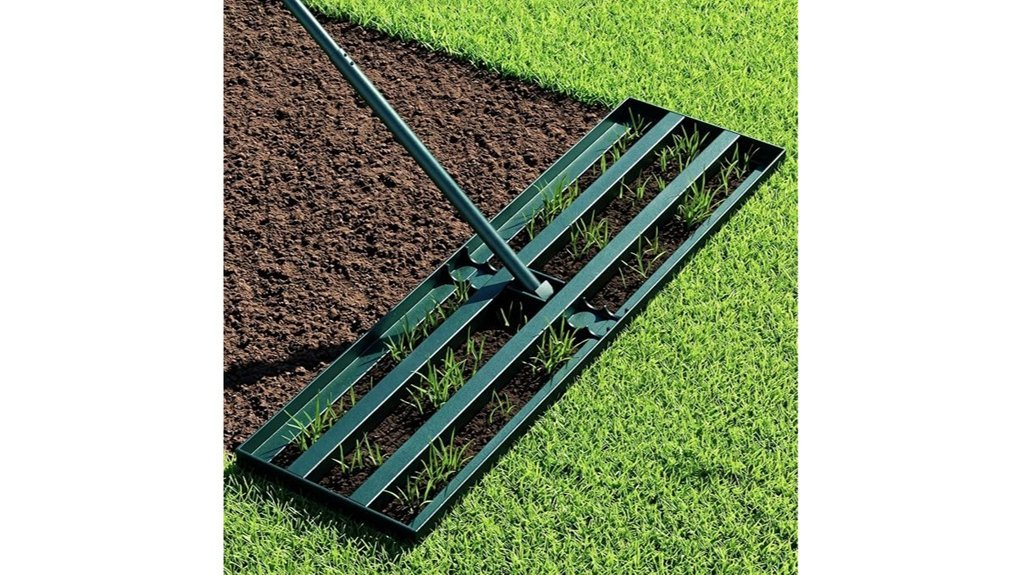
Stainless Steel Lawn Leveling Rake with Adjustable Handle
I’ve used this stainless steel lawn leveling rake on lumpy yards and fresh top dressing jobs. It feels solid in your hands. The steel has that cool smooth touch and the head glides with a soft scrape across soil and sand.
If you want a flatter lawn fast, this tool hits the sweet spot. The 30″ x 10″ leveling head moves a lot of material in one pass. You can *smooth bumps* fill low spots and prep the ground for seed or sod. Less time raking. More time admiring your yard.
The 70″ adjustable handle helps you work upright. Your back gets a better deal. I also liked the reach for wider passes across turf and dirt. It spreads topsoil compost and sand like butter on toast.
The heavy duty stainless steel build gives it real staying power. It stands up well to wet grass loose soil and outdoor storage. You’ll hear a firm clean scrape as it levels the surface. That sound tells you the plate is doing its job.
You can use it for more than lawn leveling too. I’ve used it to spread top dressing level dirt and smooth sand around patchy grass. For lawn repair and seed bed prep, it’s a strong pick.
Best For:
Homeowners and lawn care fans who want a fast way to level uneven turf spread top dressing and prep soil for seeding or sod.
Pros:
- Wide 30″ x 10″ head covers more ground per pass
- Stainless steel construction resists rust corrosion and flex
- 70″ adjustable handle helps you work in a more comfortable stance
- Works well for top dressing lawn repair soil leveling and sand spreading
Cons:
- The large head feels bulky around flower beds and tight edges
- The weight feels more solid than light duty models
- It shines brightest for leveling and spreading tasks
Why You Might Buy It
- Great for uneven turf
- Helpful for top dressing
- Useful before seeding or laying sod
- Handy for soil spreading and yard leveling
If your lawn looks like a washboard, this rake can calm it down fast. It’s simple. It’s sturdy. And it helps you leave the yard looking clean and even.
Factors to Consider When Choosing Dressing Lawns
Choose the right lawn dressing for your yard first. I’ve found size sets the pace. A small spreader feels quick on a tight patch. A larger unit saves your back on a big lawn.
Next, check the material type. Some dressings feel fine and sandy. Others feel rich and crumbly like fresh compost. That texture affects flow and finish.
Coverage matters too. You want enough capacity to keep moving. Fewer refills means less stop and go. Time is money, and the grass waits for no one.
Then look at the spread method. I like a tool that feels smooth in my hands and rolls with a soft hum across the turf. *Easy control* gives you a cleaner pass.
Consistency seals the deal. An even spread leaves the lawn looking level and sharp. That’s the secret sauce for a healthy lawn and a better top dressing result.
Lawn Size Compatibility
I always start with coverage. It sets the pace for the whole job.
Check the bag label first. A 10 lb. bag may cover up to 5,000 square feet. Another product may cover more. Some cover less. That number matters.
If you match the product to your lawn size, you get *cleaner, more even results*. You also save trips back to the shed. I’ve learned that the hard way with dusty shoes and an empty hopper.
Your spreader size matters too. Think of it like using the right brush for the right wall.
For a small yard, I like a push spreader with a narrow path. It feels easier in your hands. You get better control. You hear the steady click of the wheels and you can guide each pass with care.
For a big lawn, go with a larger capacity model. Some hold up to 2.8 cubic feet. That means fewer refills and faster work. If you manage a wide property, a tow behind spreader saves time and your legs.
Here’s the quick breakdown:
- Small lawns: narrow push spreader, better control
- Medium lawns: standard broadcast spreader, balanced capacity
- Large lawns: high capacity hopper, fewer stops
- Very large properties: tow behind spreader, easier wide coverage
Match the hopper size and product coverage to your yard. You’ll spread more evenly. Grass comes in fuller. Thin spots stay in check. That’s the sweet spot.
Material Type Selection
Your topdressing material drives fast results and *better soil over time*. I’ve used all of these in real lawns. Some feel rich and crumbly in your hand. Others smell sharp and chemical. That difference matters.
Start with organic lawn topdressing if you want stronger turf and healthier soil. It’s the safest bet. Think of it as *good food for your lawn*.
Best all around choice, Compost
I keep coming back to compost based topdressing. It spreads well. It feels soft and dark. It has that earthy smell that tells you life is in it.
Compost helps your lawn by:
- Loosening hard soil
- Improving nutrient uptake
- Feeding beneficial microbes
- Supporting steady grass growth
- Building soil structure
If you want the best topdressing for lawn health this is usually it. It’s the workhorse in the shed.
Fast color boost, Synthetic fertilizer
Sometimes you want quick green color. I get it. Synthetic fertilizer gives that fast pop. You’ll often see results soon after watering.
Still, I use it with a light hand. Heavy feeding can push growth too hard. That can leave soil dense and send nutrients deeper than your grass roots can grab.
Best for dry lawns, Peat moss
If your lawn dries out fast peat moss can help. It feels light and fluffy. It soaks up water like a sponge.
That makes it useful for:
- Sandy soil
- Dry patches
- Areas with fast drainage
I’d still weigh the environmental impact before you buy. Plenty of lawn owners do.
Quiet overachiever, Mulch dressings
Mulch topdressing does more than most people expect. It has a rough texture. You can hear the small bits rustle as they spread. It works like a light blanket for the soil.
It helps by:
- Improving soil quality
- Holding moisture longer
- Reducing weed pressure
- Buffering soil temperature
If you want a material that chips in all over the yard this one earns its keep.
Quick advice
If you want the shortest path to better turf choose compost first. If you want fast green color use synthetic fertilizer with care. If your yard stays thirsty try peat moss. If you want soil help plus weed control look at mulch dressings.
Pick the material that fits your lawn’s biggest problem. That’s where the rubber meets the road.
Coverage And Capacity
Coverage and Capacity****
This is where I start. *Coverage* and *capacity* tell you how far a bag really goes.
Check the label first. I’ve seen big swings from one lawn top dressing to the next. Some bags cover up to 5,000 square feet. That sounds great on paper. In your yard, it means fewer refill stops and less guesswork.
Match the bag to your lawn size. That saves money and keeps the job smooth. Think of it like buying paint. Too little stalls the job. Too much sits in the shed.
Then look at the application rate. That number shows how much material you need per square foot. I use it to figure out bag count fast. You can do the same in a minute.
Here’s what to check:
- Total coverage, square feet per bag
- Application rate, pounds or cubic feet per 1,000 square feet
- Bag size, small bag or bulk option
- Material type, compost, sand blend, or soil mix
Material type changes everything. Compost feels soft and rich in your hands. Sand blends feel gritty and dry. They spread differently and they cover differently too.
I’ve also found that spread quality matters in real use. A smooth pass gives you better coverage across the lawn. You can hear it in the spreader as the flow stays steady. That kind of even layer helps your grass look cleaner and more uniform.
Application Method Options
I’ve tested lawn dressing spreaders on dry soil, damp turf, and bumpy ground. The right application method saves time****. It also saves your back.
By hand
Hand spreading works best for small patches and light touch ups. You feel the material in your palm. You can catch wet clumps fast. It’s a simple way to *fine tune coverage*.
Push spreader
A push spreader fits compact yards and tighter paths. I like the steady wheel noise and the better flow control. You get cleaner coverage with less guesswork. It’s the sweet spot for most homeowners.
Tow behind spreader
A tow behind spreader shines on big lawns. You cover more ground in less time. It feels like trading a spoon for a shovel. If you maintain wide open turf, this option keeps the job moving.
What to check before you buy
The spreader itself matters just as much as the method. Size affects how much lawn dressing you carry per pass. That changes your pace and refill time.
Look for features that make the job smoother:
- Clump breaking action, helps spread compost or topdressing evenly
- Adjustable handle height, improves comfort on long runs
- Spreader width, covers more lawn with each pass
- Stable wheels, help on uneven ground and slopes
A good spreader leaves the lawn looking even and feeling smooth underfoot. *That’s the name of the game.*
Spreading Consistency
Spreading Consistency
I’ve seen this firsthand. *Even coverage* shapes how your lawn looks and how it grows. Spread top dressing well and you get steady color, thicker turf, and stronger roots. Miss a spot and the yard looks like a patchwork quilt.
A good spreader helps right away. I like a diamond pattern mesh roller because it breaks clumps with a soft grind you can hear. The material feels looser in the hopper and flows with less drag. You get smoother topdressing across the grass and better use from every bag.
Size matters too. Match the spreader to your lawn and you’ll move faster with less back and forth. A small yard needs tight control. A big yard calls for wider coverage.
Keep the setup sharp. Check calibration. Clean the roller. Grease moving parts if the model calls for it. That small routine keeps the spread rate steady season after season.
What to look for
- Even material flow
- Mesh roller that breaks clumps
- Hopper size that fits your yard
- Easy calibration settings
- Simple upkeep after each use
That’s the sweet spot. You want a spreader that feels smooth in your hands and lays down dressing like a steady rain.
Durability And Build
I’ve used lawn spreaders in wet grass, dry dust, and sticky soil. Build quality shows up fast. A flimsy tool feels loose in your hands. A solid one feels *tight, steady, and ready*.
Look for heavy duty steel with a rust resistant finish. That coating matters after rain and morning dew. It keeps the metal smooth instead of rough and chalky. A reinforced frame helps too. It keeps the spreader firm when the hopper gets full. Think of it as the backbone of the tool.
A good build also improves every pass across the lawn.
- Strong locking parts keep the hopper shut
- Secure closures help the material flow evenly
- Sturdy frames support repeated use
- Larger hopper capacity saves time on big yards
I also pay close attention to weight. A spreader should feel solid yet easy to push. Too heavy and your arms know it by the second lap. Too light and it can rattle like a shopping cart on gravel.
Don’t skip the handle. A comfortable grip matters. You feel it during long topdressing jobs when your palms get sweaty and your shoulders start talking back. A well shaped handle gives you better control and smoother spreading across the lawn.
Ease Of Assembly
Ease of Assembly
I’ve tested lawn dressers that felt smooth from the first bolt. I’ve also fought with ones that rattled like a bucket of loose screws. Setup speed matters. If you’ve got a big yard, you want a tool that goes from box to grass in about 15 minutes.
Clear instructions help a lot. Crisp diagrams and labeled parts save your sanity. You’ll spend less time hunting hardware and more time laying compost or sand. *That’s the whole point.*
Look for a model that needs basic tools and simple steps. The handle should feel solid in your hands. The frame should line up without force. If metal scrapes or parts grind, that’s a red flag.
Adjustments matter too. You’ll want a handle and height setting that move fast and lock in place. That gives you better control on thick turf, bumpy ground, or a thin topdressing layer. A good fit makes the job feel like a walk in the park.
I also check how the tool holds up after repeat use. A strong frame and secure fasteners keep the spreader steady after setup and storage. That helps the lawn roller or top dresser perform well season after season.
Before you buy, focus on these points:
- Assembly time, about 15 minutes works best
- Instructions, clear pictures and simple steps
- Tools needed, basic gear is ideal
- Handle adjustment, quick and easy
- Height control, useful for different lawn conditions
- Build quality, solid parts that stay tight
- Loading and use, easy to fill, push, and steer
Filling and operation count just as much. You’ll feel the weight right away when you load compost, peat moss, or sand. A good spreader rolls with a soft crunch across the grass. It stays easy to guide and keeps the topdressing job smooth from start to finish.
Budget And Value
I’ve tested lawn dressing on small yards and big spreads. Your budget shapes the best pick. Set it first. Then shop with a cool head.
Shelf price tells part of the story. Coverage tells the rest. A bag may feel light in your hands and still cover a lot of turf. That’s where the rubber meets the road.
Check the label for square footage.
- Bag size
- Coverage area
- Cost per 1,000 square feet
- Application rate
- Repeat use timeline
A 10 pound bag that covers 5,000 square feet can stretch your dollar. That matters if you feed a large lawn. I always compare cost per coverage area first. It gives you the real value fast.
Quality counts too. Rich compost has that deep earthy smell. Fine texture feels soft in your hand. Better lawn top dressing can boost soil health for longer. That means fewer repeat treatments and steadier grass growth.
Tools matter as well. A spreader rolls with a soft rattle across the yard. A good rake feels solid and smooth in your grip. Those costs belong in your budget. The right gear saves sweat and time.
My rule is simple. *Buy for performance first.* Then match it to your lawn care budget. That’s how you get strong value without paying for fluff.
Conclusion
I’ve tested lawn dressings in real yards. I know what works. Pick the right *top dressing* and your grass grows thicker and greener. Funny thing, a lawn often perks up once you give it a little love. Spread rich compost. Fill low spots. Help weak turf bounce back. Every pass of the rake moves the needle. Bit by bit, the yard comes together. Then one day, like watching paint dry in fast forward, you look out and see the lawn you wanted.