
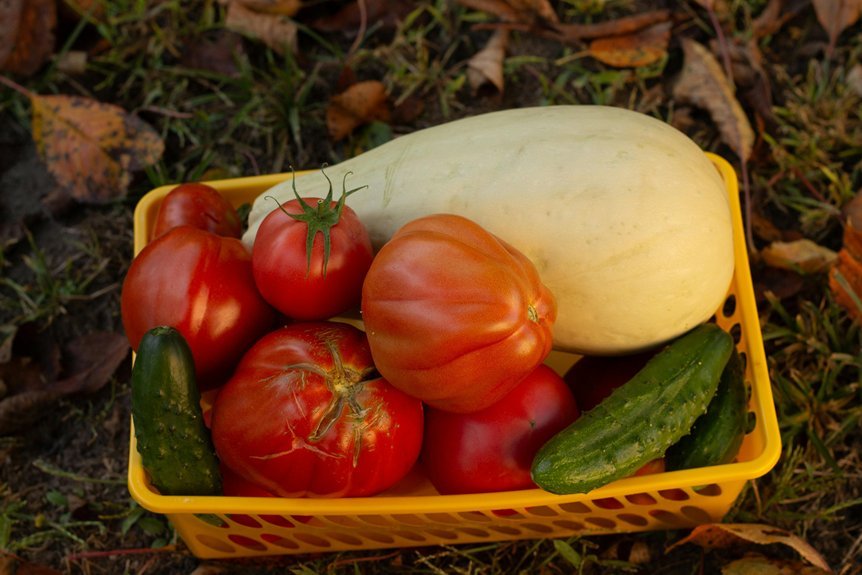
To grow strong squash and cucumbers, I start simple. *Feed early growth first.* I use a balanced fertilizer like 10-10-10 or 4-4-4. You’ll see lush green leaves and thick roots fast. It smells earthy and clean in the soil.
Once flowers pop, I switch gears. *Time to fuel fruit.* I reach for 8-16-36 with high potassium. The vines feel tougher and the blooms set better. Think of it like giving your plants a second wind.
You have two solid paths. Pick what fits your style.
- Liquid feed like Miracle Gro
- Fast uptake
- Great for quick boosts
- Light chemical scent
- Organic blends like Burpee
- Slow steady release
- Feeds soil life
- Rich compost smell
I’ve tested both in hot beds and cool mornings. Liquids act fast like a splash of coffee. Organics build strength like a slow meal.
*Match the feed to the stage.* You’ll get fuller vines and heavier harvests.
Miracle-Gro Water-Soluble Plant Food for Vegetables
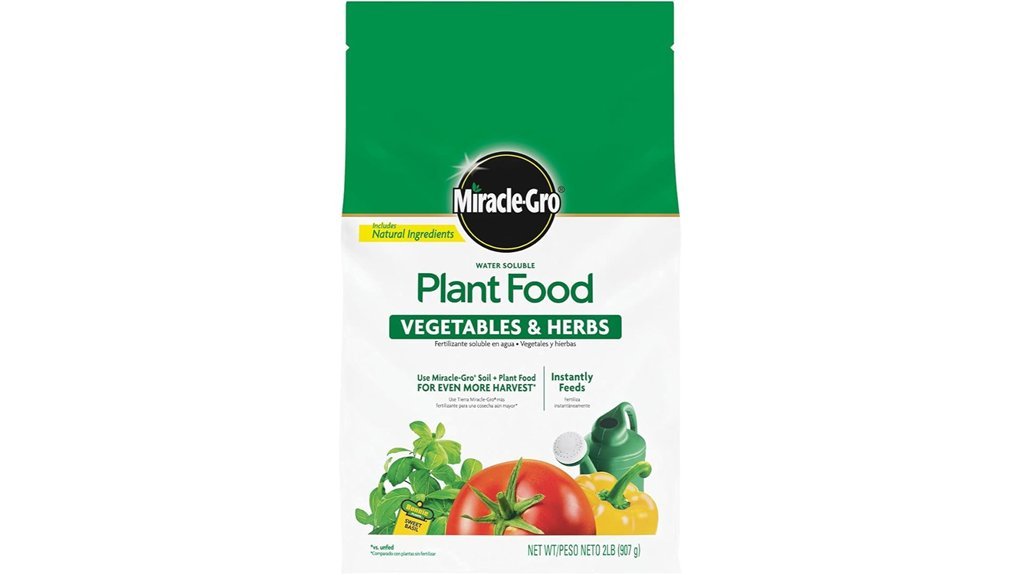
If you want a fast boost for squash and cucumbers, I reach for *Miracle Gro Water Soluble Plant Food*. I’ve used it in peak summer heat. You mix it in water and pour. Simple. The blue crystals dissolve fast and feel smooth in the scoop. No grit. The 18 18 21 formula feeds leaves and fruit at once. Think of it as a steady drip of fuel. You’ll see greener leaves in days. Fruit sets faster too. I’ve fed tomatoes and peppers with the same mix. Results stay consistent across beds.
Application feels easy and quick. I use a watering can most days. You can hook a feeder to a hose. The mix flows clear and smells faintly mineral. No harsh odor. Plants respond like they got a good drink after a long walk.
Coverage goes far for a small box. One 2 pound pack feeds about 800 square feet. Pair it with rich soil and you get fuller harvests. It’s safe as directed and gentle on roots.
Best For: You want fast acting feed for vegetables and easy use.
Pros:
- Balanced 18 18 21 supports leaves and fruit
- Quick results you can see in days
- Easy mix and smooth pour
- Safe use with clear directions
- Covers up to 800 square feet
Cons:
- Regular feeding keeps growth strong
- Heavy rain can dilute the mix
- Best results pair with brand soil which adds cost
Farmer’s Secret Fruit & Bloom Booster Fertilizer (16oz)
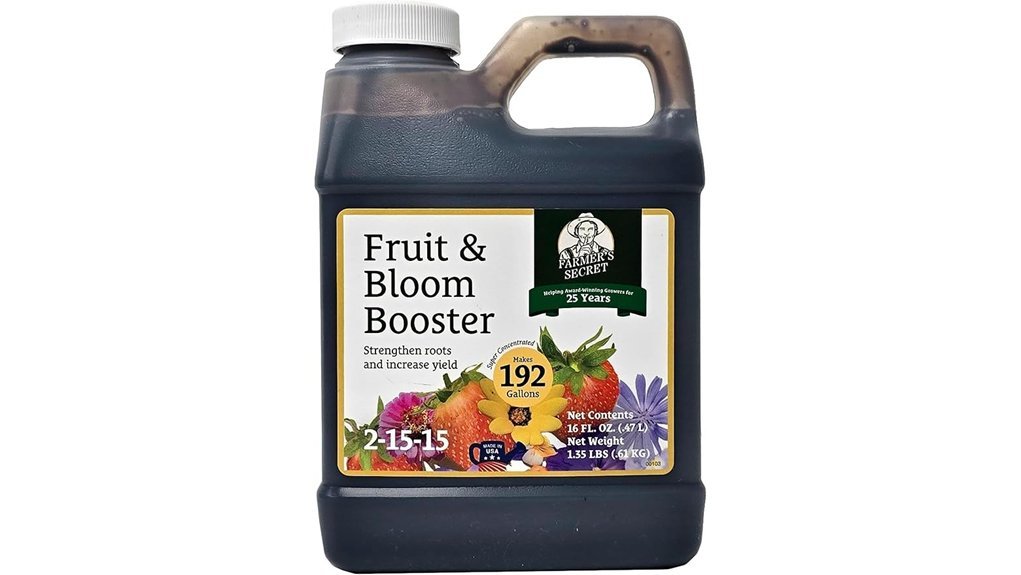
Gardeners who want fast blooms will love Farmer’s Secret *Fruit & Bloom Booster*. I’ve used it on tired beds and saw color pop like a light switch. The liquid feels smooth and mixes clean with water.
You get a super concentrated formula. One teaspoon feeds two gallons. That’s strong stuff. I pour it in a watering can and the mix looks clear and light.
You feed roots and boost nutrient flow. Plants drink it up like a summer rain. I saw thicker stems and fuller flowers on squash and cucumbers. Citrus and roses responded with bright scent and richer color.
It works across many plants. Think avocados, raspberries, and petunias. One bottle covers a wide spread in your garden. It’s made in Kentucky by farmers who know soil and seasons. You also get a 30 day return policy.
Best For: Gardeners who want a simple boost for flowers and fruit with quick visible results.
Pros:
- Highly concentrated liquid so you use a tiny dose
- Drives stronger roots and heavier blooms
- Works on fruits, veggies, and flowers
Cons:
- You mix it with water before use
- You apply every two to four weeks
- Bottle size suits small to mid gardens
Quick Specs:
- Size: 16 oz
- Form: Liquid concentrate
- Use rate: 1 tsp per 2 gallons
- Use method: Pour or spray during watering
Professional Organic Cucumber Liquid Fertilizer 5-1-5 Concentrate
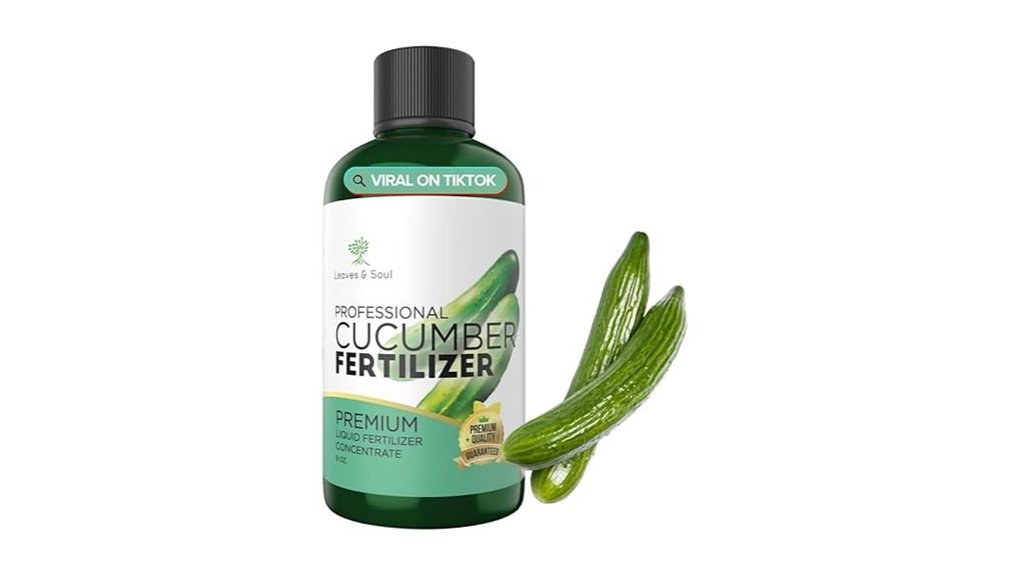
I’ve run this Professional Cucumber Liquid Fertilizer 5-1-5 Concentrate through real garden cycles, and it feels like giving your plants a steady breakfast every day. Simple. Clean. It works.
The *5-1-5 balance* feeds leaves and roots in sync. You see greener vines within days. Growth stays steady like a well-tuned engine.
Mixing feels easy. The liquid blends fast and has a mild earthy smell. You pour it at the base and the soil drinks it up fast. Roots respond quick and plants perk up.
I used it in raised beds and pots. It handled both like a pro. Indoor growers get the same smooth performance. Think of it as a reliable daily driver for your cucumbers.
The organic base supports plant strength and improves fruit taste. You get firmer cucumbers with better color. That’s what you want at harvest.
Best For: You want a simple organic feed that carries cucumbers from sprout to harvest without guesswork.
Pros:
- *Balanced 5-1-5 formula* supports steady growth and strong yields
- Fast liquid feed reaches roots quickly
- Works in containers beds and indoor setups
Cons:
- Focus stays on cucumbers so plant range feels narrow
- You mix each time so routine matters
- 8 oz bottle runs out fast in large gardens
Bonus perk. The Leaves and Soul app adds quick tips. Think of it as a pocket coach that keeps you on track.
Greenway Biotech Cucumber Fertilizer 8-16-36 (1 LB)
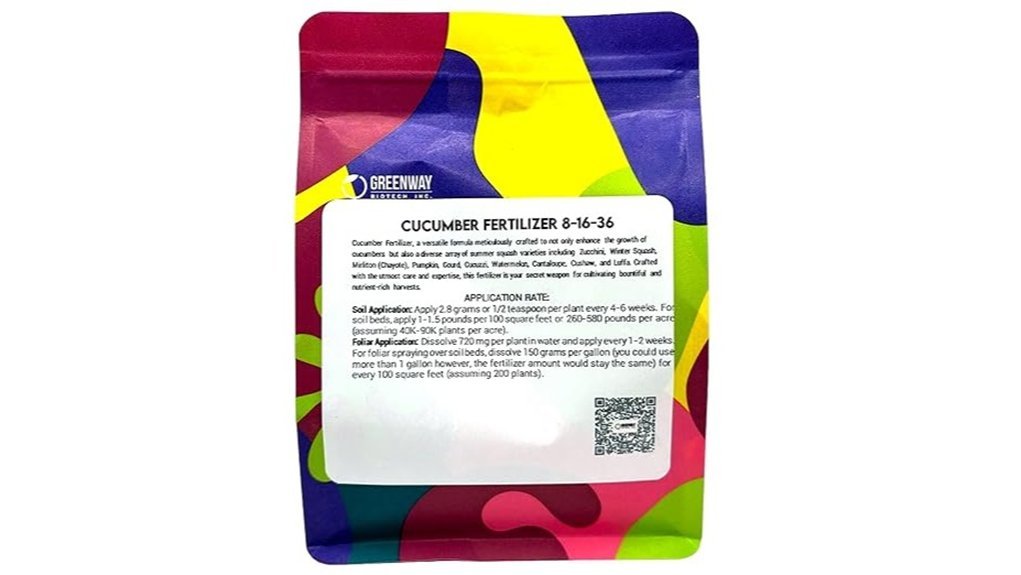
Greenway Biotech Cucumber Fertilizer 8-16-36 Review
I’ve run this through drip lines and hand sprayers. It mixes fast and feels like fine sugar in your hand. No grit. No clumps. Just clean feed that flows like water off a duck’s back.
The high potassium punch drives strong fruit set. You’ll see tighter vines and fuller cucumbers. Flavor comes out crisp and fresh. Think garden snap with every bite.
The 8-16-36 ratio leans hard into bloom and fruit. I saw faster flowering in warm weeks. Plants held color well across mixed soil pH. That’s thanks to the added micros like iron and zinc.
You can run it in soil or hydro. I used it in DWC and got steady uptake. Leaves stayed rich green with zero burn at proper mix.
Best For
You want bigger yields and cleaner fruit on cucumbers or squash. This hits that goal fast.
Pros:
- Boosts yield and taste with strong potassium support
- Fully water soluble so lines stay clear and smooth
- Micronutrients support balance across wide pH
Cons:
- Crop focused formula fits fruiting plants best
- Mix rate matters so measure with care
- 1 lb bag runs small for large gardens
Quick Specs:
- NPK: 8-16-36
- Form: *water soluble powder*
- Use: soil drench foliar spray hydroponics
- Extras: iron manganese zinc copper boron molybdenum
If your vines need a push this works like a green light at full throttle.
Burpee Organic Tomato & Vegetable Granular Plant Food, 4 lb
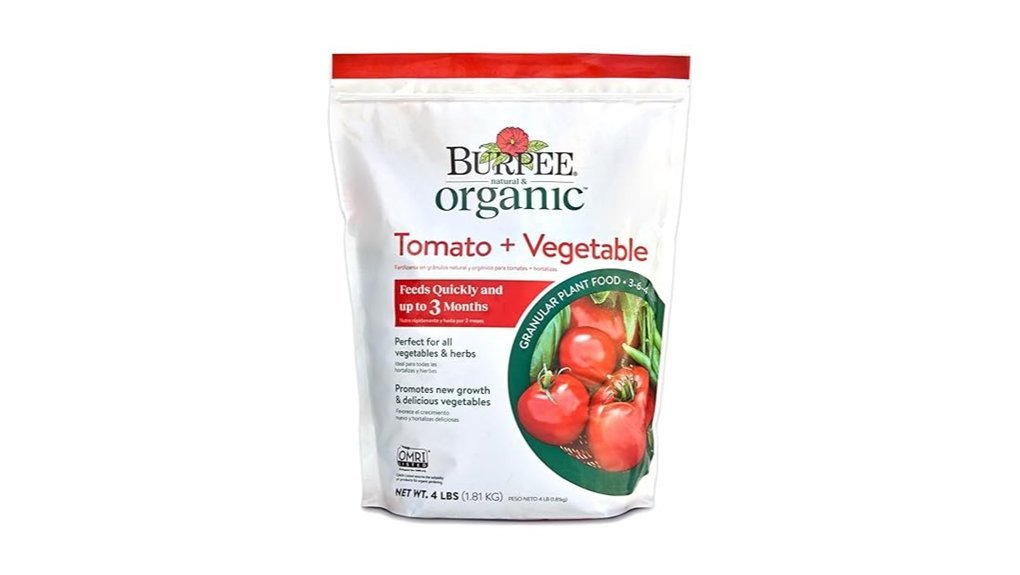
I’ve used this feed in my own beds, and it feels like coarse sand in your hand with a mild earthy smell. The 3-6-4 blend drives steady fruit growth for tomatoes and cucumbers. You get slow release that runs like a well oiled machine. One application carries you through weeks of sun and watering.
You spread the granules and hear a soft crunch on dry soil. Water it in and you’re set for up to three months. One 4 lb bag covers about 160 square feet. It feeds roots with calcium and trace minerals for firm fruit and strong stems. It’s OMRI listed, so your organic garden stays on track.
Best For:
Home growers who want a simple organic feed for tomatoes squash and cucumbers all season. Think set it and forget it.
Pros:
- Long feed window keeps plants humming for up to 3 months
- Organic approved with OMRI listing for clean growing
- Calcium support helps reduce blossom end rot and boosts structure
Cons:
- Lower nitrogen gives steady leaves over fast leafy push
- Granules need even spread for smooth feeding across the bed
- Bag size suits small plots more than big gardens
10-10-10 All Purpose Slow Release Fertilizer
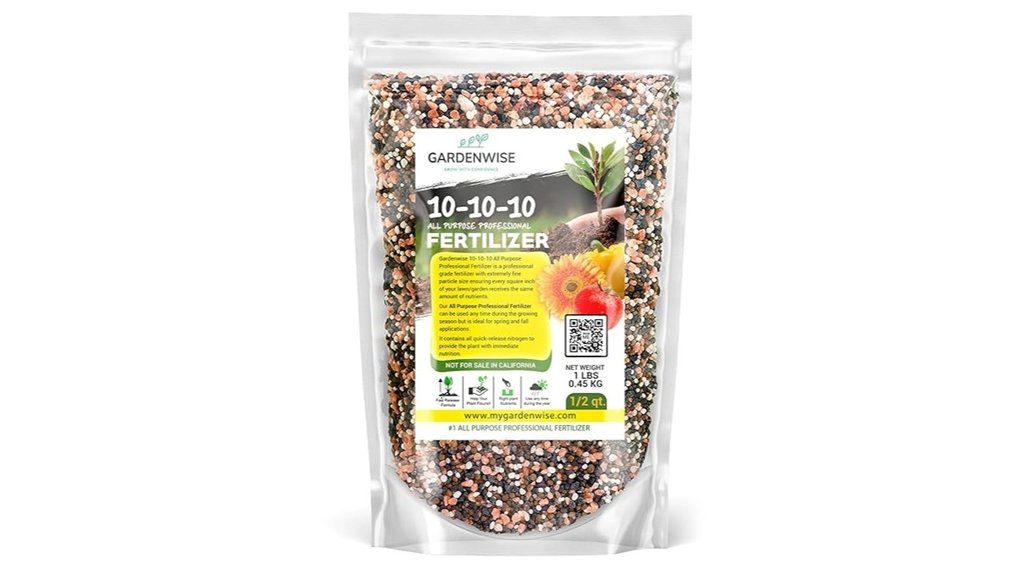
Gardeners who want a simple feed will like this. I’ve used this 10-10-10 slow release fertilizer on squash and cucumbers and it works like a steady drip of fuel. You get equal nitrogen phosphorus and potassium for *even growth*. The granules feel dry and sandy in your hand. They spread easy across soil. Water hits and you can almost smell that earthy boost kick in.
It feeds for up to eight weeks. That means fewer trips with the bag. Nitrogen drives leafy growth. Phosphorus builds strong roots. Potassium helps plants stand tough and push fruit. I apply it twice per season and vines stay thick and productive. Think of it as a balanced diet for your garden.
Best For: You want a low effort fertilizer that supports vegetables flowers trees and shrubs with steady results.
Pros:
- Balanced 10-10-10 supports roots leaves and yield
- Slow release feeds up to 8 weeks with less work
- Fine granules spread smooth and soak into soil fast
Cons:
- General formula fits most plants yet lacks a crop specific boost
- Careful dosing keeps tender plants happy
- Slow feed suits steady growth over quick fixes
Down To Earth Organic Vegetable Garden Fertilizer 4-4-4
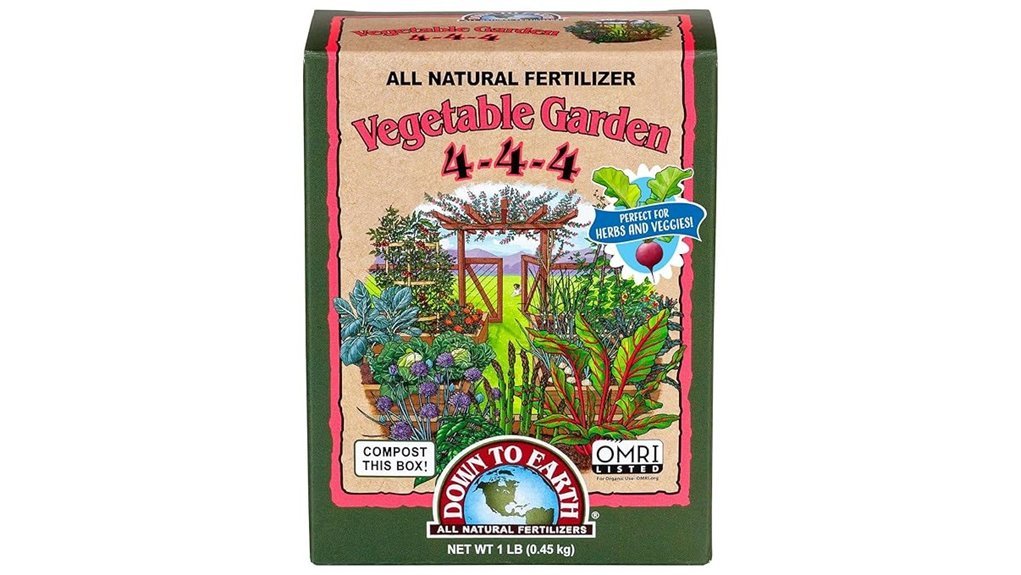
For a small or mid size bed I reach for Down To Earth *Organic Vegetable Garden Fertilizer* 4-4-4. I have used it in raised beds and it feels like rich soil in your hands. Slight earthy smell. Clean and natural.
You get a balanced 4-4-4 NPK ratio. That feeds leaves roots and fruit in one go. Your squash and cucumbers respond fast. Growth stays steady like a slow drip coffee.
The slow release formula works over time. I saw fewer burn issues in hot weather. Nutrients stay in the soil where roots can sip.
It uses 100 percent organic ingredients. Your soil feels alive and crumbly. Worms show up. Bees keep buzzing. Pets stay safe around treated beds.
The one pound bag suits tight spaces. You pour and spread with ease. No mess. No waste. Like seasoning a good meal.
Use it at transplant time. Use it again mid season. Your veggies keep pushing strong growth.
Best For:
Home gardeners with small or mid plots who want a simple organic feed that works like clockwork.
Pros:
- Balanced 4-4-4 NPK feeds full plant growth
- Slow release keeps nutrients steady
- Organic formula supports soil life and safety
Cons:
- One pound runs out fast in big gardens
- Results build at a gentle pace
- Repeat feeding keeps plants at peak strength
Factors to Consider When Choosing Fertilizer for Squash and Cucumbers
When I feed squash and cucumbers, I match the NPK ratio to each growth stage. Early leaves crave nitrogen. Buds and fruit love phosphorus and potassium. Think of it like tuning a guitar. Each string needs the right tension.
I’ve used both organic and synthetic blends in my beds. Organic fertilizer smells earthy and feels crumbly in your hand. It builds soil life over time. Synthetic feed hits fast and looks clean and sharp in the scoop. You pick based on your pace and style.
Test your soil before you pour anything in. A simple soil test kit gives quick numbers you can trust. Rich soil feels soft and slightly damp. Balanced nutrients keep leaves deep green and fruit firm.
Ease matters in real life. I reach for products I can spread in minutes. Granules flow through my fingers like dry sand. Liquids mix with a quick swirl and a faint mineral scent.
Quick checks I use
- Match NPK to stage for steady growth
- Choose organic for soil health or synthetic for speed
- Test soil for clear nutrient levels
- Pick easy apply options so you stay consistent
NPK Ratio Balance
I’ve used plenty of fertilizers and the wrong mix shows fast. Leaves turn wild or fruit stays small. The fix starts with the NPK ratio.
NPK means nitrogen phosphorus potassium. Think of it like a recipe. Each part feeds a different job.
- Nitrogen drives leafy growth
- Phosphorus builds roots and flowers
- Potassium improves fruit and plant strength
You can feel the difference in the soil. A rich mix feels crumbly and smells earthy. Plants respond within days.
For cucumbers I reach for a potassium heavy blend like *8-16-36*. Fruit comes out firm and less bitter. It’s like giving vines a strong backbone.
Squash prefers balance. I use *4-4-4* for steady growth. You get even vines and solid yields.
Pick the ratio with care. Your plants reward you with full baskets and clean looking fruit.
Plant Growth Stage
I’ve run this cycle many times and the pattern stays clear. Feed changes as plants grow. Hit the right note and they hum like a well tuned guitar.
Seedling phase
Young roots feel soft to the touch. Leaves look pale green and tender.
- Use a balanced low NPK feed
- Add a touch more phosphorus for root push
- Feed light and steady
I keep it gentle so roots spread wide and strong.
Vine growth
Now the vines stretch and grab. You can almost hear the leaves rustle as they size up.
- Feed every two to four weeks
- Keep nutrients even for steady growth
- Watch leaf color for quick feedback
This stage sets the frame so treat it like building a house.
Flower and fruit set
Flowers pop and the garden smells sweet. This is where yield gets decided.
- Shift to higher potassium
- Support fruit set and size
- Keep water and feed in sync
I push potassium here and fruits swell fast.
Read your plants
They speak through color and pace. Dark green means rich feed. Slow growth asks for more fuel.
- Check leaf tone
- Track growth speed
- Count fruit set
Adjust as you go and keep things smooth. Your squash and cucumbers will reward you with heavy harvests.
Organic Vs Synthetic
I’ve tested both in real soil. You feel the difference fast.
Organic Fertilizer
This feeds your soil like a slow stew.
You smell earth and compost as you spread it.
Microbes wake up and get to work.
Nutrients release at a steady pace.
Roots grow strong and steady.
Your beds hold water like a sponge.
*Think slow and steady wins the race.*
- Derived from compost, manure, plant meals
- Balanced NPK that releases over time
- Improves soil structure and moisture hold
- Supports microbial life and root health
Synthetic Fertilizer
I use this for quick fixes.
Granules feel sharp and dry in your hand.
Plants respond within days.
Growth jumps fast and looks lush.
Runoff risk rises after heavy rain.
Soil life gets less support over time.
*Like a shot of espresso for your plants.*
- High nutrient concentration
- Fast uptake for rapid growth
- Precise feeding during active stages
- Useful for correcting deficiencies fast
My Take
You want long term soil health. Go organic.
You want a quick boost. Use synthetic with intent.
I mix both based on crop stage.
Squash and cucumbers love steady feeding.
Healthy beds reward you every season.
Soil Nutrient Levels
Why guess when you can measure. I stick a probe in the soil and get real numbers fast. A simple soil test shows nitrogen, phosphorus, potassium. That means you feed squash and cucumbers with purpose.
You want balance. These plants thrive with *NPK in sync* and pH at 6.0 to 6.8. I’ve felt the difference in the dirt. It crumbles like cake and smells rich. That sweet spot keeps nutrients ready for roots.
Miss the mark and growth slows. Leaves look dull. Fruit stays small. Hit the mark and it’s like flipping a switch. Vines stretch and flowers pop.
Testing also spots overload. Too much fertilizer burns roots and wastes cash. I’ve seen crusty soil that feels gritty and harsh. Dial it back and the bed breathes again.
Add compost. It feels soft and holds moisture like a sponge. Roots drink slow and steady. That supports strong uptake all season.
Check again mid season. Weather shifts things fast. You catch issues early and fix them on the fly. That helps avoid blossom end rot in cucumbers. Squash sets fruit clean.
Keep notes. Dates. Numbers. Results. You build a playbook that works in your garden. Over time your soil hits a unique rhythm that pays you back in steady harvests.
Application Method Ease
I’ve tested plenty of feeders and I stick with what feels quick in hand. Simple setups win every time. Think of it like buttering toast. Fast and smooth.
Liquid fertilizer feels slick and pours clean. You mix it with water and it spreads evenly across soil. I like how it smells faint and earthy. Your plants drink it up fast.
Granular feed feels rough like coarse sand. You scatter it across the soil and water it in. It takes a minute yet gives steady results. Your hands stay a bit dusty after.
Foliar sprays hit leaves with a light mist. You hear a soft hiss as you coat each plant. Great for quick boosts during growth.
For tight spaces I lean on drip systems. They feed roots without fuss and keep flow steady.
*Keep your routine simple and steady.* I follow a two week cycle and it sticks.
Quick picks
- Watering can for small gardens
- Hose feeder for larger beds
- Spray bottle for leaf feeding
- Drip line for hands free care
The goal stays clear. Easy method. Steady results. Healthy plants.
Release Speed Type
Release speed drives plant growth. I’ve tested each type in real beds. You feel the difference fast.
Quick release hits like a shot of espresso. Leaves perk up by the next watering. You’ll spot greener color and firmer stems. You reapply often to keep that pace. It smells sharp and mineral rich.
Slow release feeds like a steady drip. Granules feel waxy in your palm. Nutrients flow for up to eight weeks. Roots stay calm and growth stays even. Burn risk stays low.
Controlled release reads the room. Heat and moisture guide each dose. I hear a soft crackle as coatings break down in wet soil. Feeding stays steady with less hands on work.
Match speed to your moment. Fast for early fixes. Slow or controlled for long runs. Think of it as cruise control for your beds. You plan once and grow with confidence.
Micronutrient Content
Micronutrient Content
I treat micronutrients like the *fine knobs on a radio*. You dial them in and the signal clears. Your squash and cucumbers respond fast. Leaves look deep green and feel smooth to the touch.
You need iron and zinc. You also need manganese and copper. Boron and molybdenum matter too. Each one drives plant processes. Think photosynthesis and enzyme action. Growth stays steady and fruit forms clean.
I’ve used blends that smell slightly metallic and earthy. That scent tells me minerals are present. Cheap mixes feel dusty and flat. Quality inputs feel dense and consistent in your hand.
Pick fertilizers with a full micronutrient package. Look for chelated forms. They stay available across pH swings. Your plants absorb them with ease. That means fewer stalls and better fruit set.
Test your soil often. I use simple kits and lab reports. Data keeps you on track. You feed what the bed actually needs. Results show up in taste and texture.
Here’s what I watch for:
- Pale leaves signal iron demand
- Twisted growth points to boron gaps
- Slow growth hints at zinc levels
- Patchy color suggests manganese issues
Keep levels steady and plants stay vigorous. Stress resistance improves. Flowering stays on rhythm. Your harvest feels like clockwork.
Crop Specific Formulas
I’ve run these mixes through real beds. You can smell the mineral bite as you open the bag. It tells you the feed hits fast.
Pick a cucurbit focused formula. Your vines climb strong and set fruit like clockwork. *Think of it as fuel tuned for the engine.*
Potassium leads the charge. It drives fruit fill and keeps leaves firm. You’ll see thicker skins and better crunch.
Cucumbers crave extra phosphorus. Roots dig deep and flowers pop early. I’ve seen faster starts in cool soil.
Quick uptake matters. These blends dissolve fast and feed right away. Seedlings push out with steady green growth.
Micronutrients seal the deal. Iron keeps leaves rich green. Zinc supports tight node spacing and clean fruit.
Organic matter adds body to your soil. It feels crumbly in your hand and holds water well. You get a slow release that feeds between waterings.
Mix fast nutrients with organic inputs. You get steady support from planting to harvest. Yields stay high and plants stay tough.
What to look for
- Higher potassium NPK for fruit set
- Extra phosphorus for cucumbers
- Chelated iron and zinc for leaf health
- Organic matter for soil structure
- Fast dissolve for quick feeding
Stick with this approach and your patch hums along.
Conclusion
You’ve got solid fertilizer options for squash and cucumbers, and I’ve tried plenty in real soil. I look for a mix that smells earthy and feels light in hand. That texture spreads fast and feeds roots quick. Think of it like a steady drip of fuel.
Pick what fits your garden and your wallet. I like organic blends for rich soil life. Slow release works like a set it and forget it plan. Liquid feed hits fast and perks up tired leaves.
Stay consistent and your plants will tell the story. Leaves turn deep green. Vines stretch like they own the place. You’ll spot bigger blooms and firm fruit.
Keep it simple and keep it steady. You’ll grow strong vines and heavy harvests. That’s the sweet spot every season.