
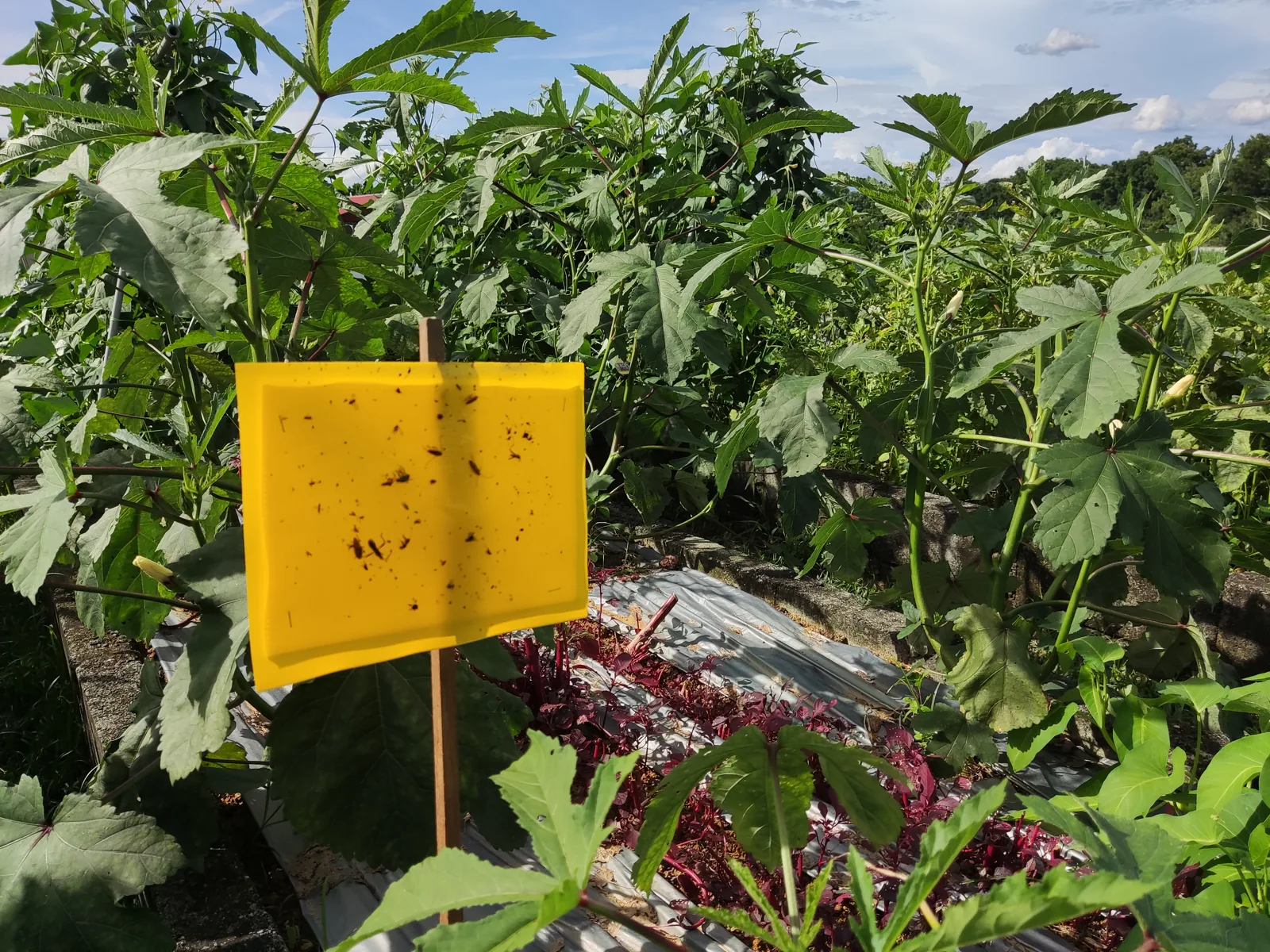
The best fungus gnat traps for houseplants are plain yellow sticky cards, like the Garsum 36-pack, staked into the pot right at leaf level. They are cheap, they catch the flying adults, and they show you whether the problem is shrinking. They do not touch the larvae in the soil, though, so pair them with a Bti product such as Summit Mosquito Bits and drier topsoil if you want the gnats gone rather than just counted.
We may earn a commission when you buy through links on this page, at no extra cost to you. As an Amazon Associate we earn from qualifying purchases.
How we chose
We did not test these products ourselves. We started from what university extension services recommend for fungus gnats (Wisconsin, Oregon State and Oklahoma State all point to yellow sticky traps for adults and Bti for larvae), then picked widely reviewed Amazon products in each category. Ratings and pack sizes come from the Amazon listings as checked on October 22, 2026, and usage directions come from the manufacturer label. Owner-review patterns, good and bad, are taken from Amazon’s review summaries.
Which trap kills which stage
Gnats keep coming back because of their life cycle. According to University of Wisconsin Extension, a female fungus gnat lays up to 200 eggs in moist potting soil. The eggs hatch in three to six days, the larvae feed for one to two weeks, pupae take about four to five days, and the adults live roughly a week. Egg to adult takes three to four weeks, and indoors all stages overlap. A trap that only catches adults removes the egg layers, but larvae already in the soil keep hatching for weeks.
| Product | Type | Life stage it targets | Pack / size | Amazon rating (Oct 22, 2026) |
|---|---|---|---|---|
| Garsum Yellow Sticky Traps | Yellow sticky card with stake | Flying adults | 36 traps | 4.5/5 from 29,000+ ratings |
| Cleanuper Yellow Sticky Gnat Traps | Small shaped sticky cards | Flying adults | 58 traps | 4.4/5 from 6,400+ ratings |
| Summit Mosquito Bits | Bti granules (soil drench) | Larvae in the soil | 30 oz | 4.4/5 from 36,800+ ratings |
| Katchy Indoor Insect Trap | UV light + fan + glue board | Flying adults | 1 trap | 3.9/5 from 70,900+ ratings |
One thing missing from this table on purpose: vinegar traps. Wisconsin Extension states that vinegar traps and other fruit fly methods do not work for monitoring fungus gnats. If a cup of apple cider vinegar is catching flies in your kitchen, you probably have fruit flies, which are a different insect.
Garsum Yellow Sticky Traps (36-pack): best everyday trap
This is the standard cardboard-and-glue yellow trap with a stake, and it has the largest review base among the sticky cards here. The listing gives the dimensions as about 4.76 by 5.91 inches, a bit bigger than the 2-inch squares Oregon State Extension mentions as the common garden-center size.
Good for: anyone with a handful of affected pots who wants a cheap way to catch adults and track whether numbers are falling.
Skip it if: your plants live in very small pots. Several owners say the cards are too large for tiny containers.
- Pro: yellow sticky cards are what Wisconsin, Oregon State and Oklahoma State Extension all recommend for adult fungus gnats.
- Pro: 36 cards cover several replacement rounds across multiple pots.
- Pro: owners in Amazon’s review summary mention no smell and good value.
- Pro: the stake design keeps the card at leaf height, where Wisconsin Extension says to place traps.
- Con: stickiness gets mixed feedback, and some owners say the cards stick to hands and everything else while you peel them.
- Con: does nothing about larvae in the soil.
Cleanuper Yellow Sticky Gnat Traps (58-pack): best for small pots and many plants
Cleanuper sells smaller cards in sunflower and butterfly shapes, 58 to a pack. If you have a shelf of small houseplants, a higher card count matters more than card size because Oregon State Extension advises replacing traps every few days.
Good for: collections of many small pots and seed trays, and anyone who doesn’t want a large yellow rectangle in every planter.
Skip it if: you have one or two large floor plants. A few bigger cards will cover more of the canopy.
- Pro: 58 traps per pack, the highest count here.
- Pro: smaller shaped cards are less obvious in decorative pots.
- Pro: owners in Amazon’s review summary call them effective and good value.
- Con: stickiness and ease of peeling get mixed feedback.
- Con: some owners say the cards fall apart, so expect to replace them sooner.
Summit Mosquito Bits (30 oz): the larva half of the job
This isn’t a trap, but it’s the part most trap buyers are missing. Mosquito Bits are corn cob granules carrying Bacillus thuringiensis subsp. israelensis (Bti), a bacterium that kills fungus gnat larvae in the soil. Wisconsin and Oklahoma State Extension both name Bti products for fungus gnat larvae, and Wisconsin mentions Mosquito Bits by name. Oregon State Extension notes that Bti kills larvae but does not affect flying adults, which is why you still need the sticky cards.
Summit’s label gives the houseplant method: mix 4 tablespoons of Mosquito Bits per gallon of water, soak for 30 minutes, skim off the granules, and water the plants with the liquid. Read the label on your own package before using it.
Good for: any infestation that has lasted more than a couple of weeks, which means larvae are established.
Skip it if: you only see the odd gnat on a new plant. A sticky card and drier soil may be enough.
- Pro: targets the soil stage, which sticky traps can’t reach.
- Pro: Bti is the biological control extension services point homeowners to for fungus gnat larvae.
- Pro: owners in Amazon’s review summary specifically mention it working on fungus gnats.
- Con: it is labeled first for mosquito control, so the houseplant method is a drench you have to mix each time.
- Con: some owners mention an unpleasant odor, and opinions on value are mixed.
Katchy Indoor Insect Trap: a plug-in option, with caveats
Katchy combines a UV light, a fan and a sticky glue board in one plug-in unit. It works on the same fact the extension guides mention: adult fungus gnats fly toward light sources such as lamps and windows. It has the largest number of ratings of anything here, but also the lowest average.
Good for: rooms where you don’t want sticky cards in every pot, such as a living room with pets or children. Oregon State Extension advises care with sticky traps around both.
Skip it if: you want the most reliable catch for the money. Yellow cards are the method extension services recommend, and they cost a fraction of this.
- Pro: no sticky cards inside the pots.
- Pro: owners in Amazon’s review summary praise easy setup and quiet operation.
- Pro: also catches fruit flies, which often share a kitchen with houseplants.
- Con: effectiveness gets mixed reviews; some owners say it caught little or nothing.
- Con: some owners report units that stopped working early.
- Con: catches only adults, same as a sticky card.
A 4-week plan that matches the gnat life cycle
Because egg to adult takes three to four weeks, any plan shorter than that will look like it worked and then fail. This schedule combines the extension recommendations above.
- Day 1: confirm it’s fungus gnats. Adults are about 1/8 inch long, dark, and walk on the soil surface. To check for larvae, Wisconsin Extension suggests laying slices of raw potato on the soil and looking underneath after three to four days. Larvae are pale, about 1/4 inch long, with a black head.
- Day 1: put up sticky cards. One card per affected pot, staked at leaf height.
- Day 1 onward: dry the surface. Oregon State Extension says the larvae live in the top half inch of soil and need moisture. Let the top inch dry before watering, water from the bottom, and empty saucers. A soil moisture meter takes the guesswork out of “is the top inch dry yet”.
- Week 1: treat the soil. Water affected pots with a Bti drench made per the product label.
- Every few days: replace cards. Oregon State recommends replacing them every few days. Note roughly how many gnats each card holds, since that count is how you’ll know the plan is working.
- Weeks 2-4: repeat the Bti drench at the interval on your product label, and keep the soil surface dry.
- Optional: top-dress. Wisconsin Extension suggests a 1/2 to 1 inch layer of coarse sand or fine gravel on top of the soil to make it less attractive for egg-laying.
If the cards still fill up after four weeks, check the source. Oregon State Extension points to decaying leaves and flowers left on the soil, potting soil that wasn’t heat pasteurized or was stored near the infested plants, and new plants that weren’t quarantined. When you repot, a fresh bagged mix and a matched houseplant fertilizer give you a clean start.
Choosing your setup
- A few gnats on one new plant: one pack of yellow sticky cards, drier watering, and quarantine the plant for a few weeks with a card in it, as Oregon State suggests.
- Gnats in several pots for weeks: sticky cards plus a Bti product. This is the combination that covers both adults and larvae.
- Many small pots or seedlings: the higher-count Cleanuper pack, plus Bti. Oregon State notes that larvae can directly damage seedlings.
- Pets or kids near the plants: a plug-in light trap away from reach, with Bti for the soil.
For a broader look at low-toxicity options, see our guides to organic bug killers for plants and eco-friendly pest controls.
FAQ
Do yellow sticky traps get rid of fungus gnats?
They reduce the number of egg-laying adults and show you how bad the problem is, but they don’t reach the larvae in the soil. Wisconsin Extension calls changing the growing conditions, mainly keeping the soil surface dry, the single most important step.
Does apple cider vinegar work as a fungus gnat trap?
Not reliably. Wisconsin Extension states that vinegar traps used for fruit flies do not work for monitoring fungus gnats. If a vinegar trap is full, check whether you actually have fruit flies.
Are fungus gnats harmful to plants?
Adults don’t feed on plants. The larvae mostly eat decaying organic matter and fungi, but in large numbers they can feed on roots, and Oregon State Extension notes they can damage seedlings directly. Damage to mature houseplants is rare.
How long does it take to get rid of fungus gnats?
Plan on at least three to four weeks, the length of one egg-to-adult cycle. Fewer gnats on the cards after a week means the plan is working, not that it’s finished.
How often should I replace sticky traps?
Oregon State Extension recommends every few days during an active infestation, or sooner once a card is covered.
Sources
All checked October 22, 2026.
- University of Wisconsin-Madison Extension, Fungus Gnats on Houseplants: hort.extension.wisc.edu/articles/fungus-gnats-on-houseplants/ (life cycle, sizes, potato test, vinegar traps, sand top-dressing, Bti)
- Oregon State University Extension, I have fungus gnats everywhere: extension.oregonstate.edu (watering, trap size and replacement, Bti drench, quarantine, seedlings)
- Oklahoma State University Extension, Get Control of Fungus Gnats on Houseplants: extension.okstate.edu (sticky traps, Bti)
- Summit Chemical, Mosquito Bits specimen label: summitchemical.com (4 tablespoons per gallon, 30-minute soak)
- Amazon listing ASIN B07ZSC4CK1, Garsum 36-pack: rating, count, dimensions, review summary
- Amazon listing ASIN B0CNGBLV5N, Cleanuper 58-pack: rating, count, review summary
- Amazon listing ASIN B0001AUF8G, Summit Mosquito Bits 30 oz: rating, count, active ingredient, review summary
- Amazon listing ASIN B07B6RZP4H, Katchy Indoor Insect Trap: rating, count, features, review summary
- Owner notes / photos: none