
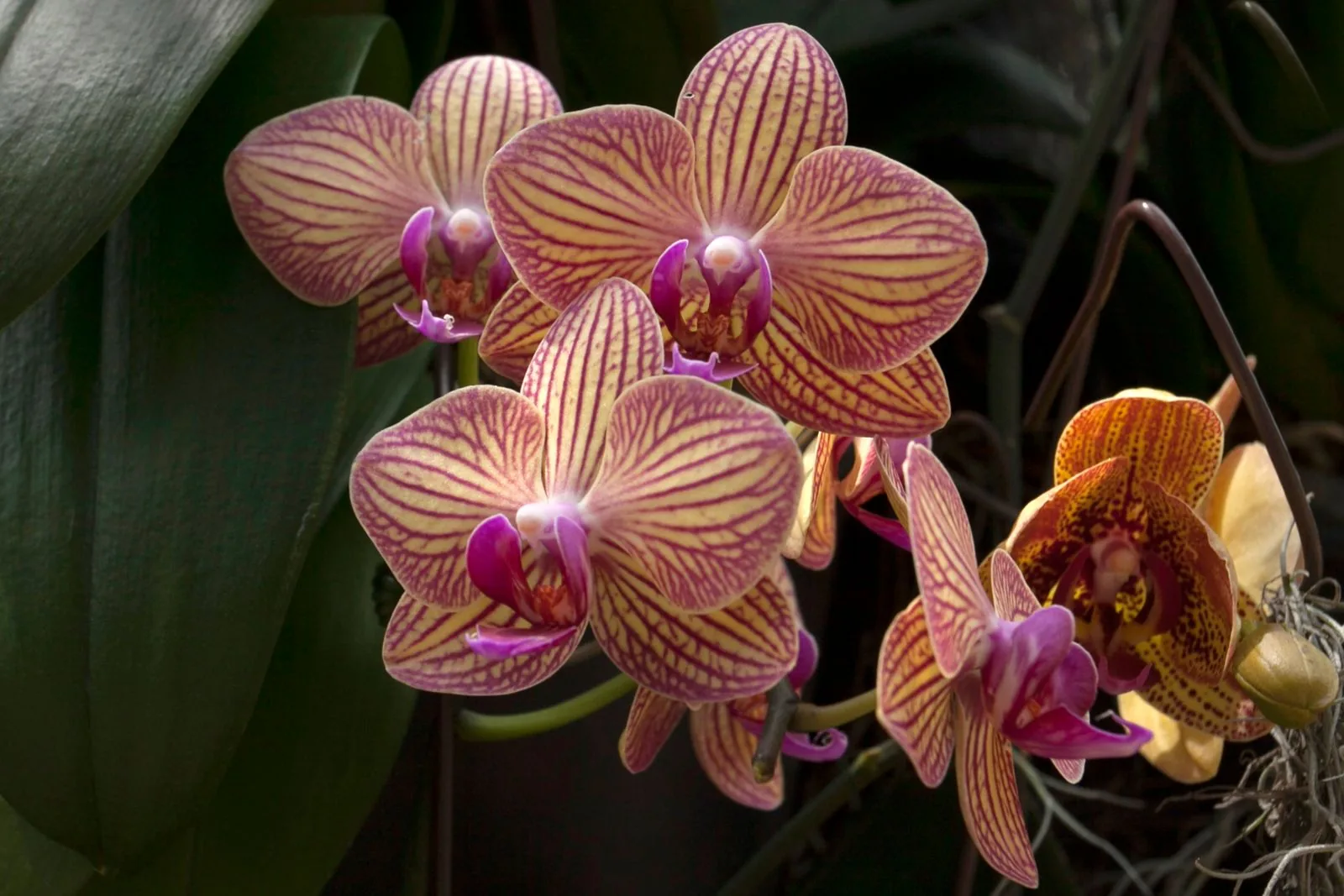
The best fertilizer for orchids is the one that fits your water. For most home growers using tap, rain or filtered water, our top pick is rePotme Feed ME! MSU Orchid Fertilizer (RO/Rain/Tap version): it is urea-free, supplies the calcium and magnesium that pure water lacks, and comes with a clear weekly dosing plan. If you water from a hard well, pick the MSU well water formula (19-4-23) instead, because it was designed for water that already carries calcium, magnesium and alkalinity.
We may earn a commission when you buy through links on this page, at no extra cost to you. As an Amazon Associate we earn from qualifying purchases.
Why your water decides the fertilizer
Most orchids grow in bark, moss or other mixes that hold almost no nutrients and buffer pH very little. That means two things come only from you: the nutrients in the fertilizer and whatever is dissolved in your water.
Bill Argo, one of the people who designed the well-known Michigan State University (MSU) formulas, explains the logic in the Journal of the International Phalaenopsis Alliance. Orchids appear to do best when the potting mix sits around pH 6.0. Pure water (rain or reverse osmosis) has very little alkalinity, so a fertilizer heavy in ammonium or urea nitrogen slowly drives the mix too acidic. His rule: with pure water, no more than 10% of the fertilizer’s nitrogen should be in ammoniacal or urea form. Hard, alkaline water works the other way and needs more ammoniacal nitrogen to keep pH from creeping up.
He also points out that the MSU formulas were not designed for orchids specifically. They were designed to match the two water sources in the MSU greenhouses: 13-3-15 for RO water (with added calcium and magnesium, because RO water has none) and 19-4-23 for the campus well water (higher ammoniacal nitrogen, little calcium and no magnesium, because that water already had plenty). They work well on orchids for the same reason they work on other plants: they fit the water.
That is the angle most “best orchid fertilizer” lists skip. Below, each product is sorted by the water it suits, with the nitrogen form, calcium and magnesium read from the label rather than the marketing copy.
How we chose
We did not grow orchids side by side for this guide. We compared label data (guaranteed analysis, nitrogen form, dose), manufacturer directions, the published reasoning behind the MSU formulas, and Amazon owner ratings and review summaries checked on November 23, 2026. Every product was confirmed in stock through the Amazon product API on the same day. Prices change, so we left them out.
Orchid fertilizers compared
| Product | N-P-K | Best water match | Nitrogen form (label) | Ca / Mg | Label dose | Amazon rating (Nov 2026) |
|---|---|---|---|---|---|---|
| rePotme Feed ME! MSU, RO/Rain/Tap | MSU RO formula | Tap, rain, RO | Urea-free | Yes / yes | 3/4 tsp per gallon fall/winter, 1 tsp spring/summer (granular) | 4.6/5, 1,387 ratings |
| Jim’s Orchid Supplies MSU 13-3-15 (Greencare) | 13-3-15 | Tap, rain, RO | Low ammoniacal (per formula design) | 8% / 2% | 1/2 to 1 tsp per gallon | 4.6/5, 144 ratings |
| Tezula Plants MSU 19-4-23 Well Water | 19-4-23 | Hard well water | About 30% ammoniacal (5.7% of 19%)* | 2% / none | See package | 4.6/5, 67 ratings |
| Grow More Urea Free 20-10-20 | 20-10-20 | Most tap water | Urea-free | Not listed | 1/2 to 1 tsp per gallon, every 10 to 14 days | 4.3/5, 483 ratings |
| Espoma Organic Orchid! | 1-3-1 | Any, used lightly | 10% ammoniacal (0.10% of 1.00%) | 1% / not listed | See note in review; every 2 to 4 weeks | 4.6/5, 862 ratings |
| Miracle-Gro Orchid Plant Food Mist | 0.02-0.02-0.02 | Convenience top-up only | About 73% urea + ammoniacal | Not listed | Spray once a week | 4.7/5, 11,617 ratings |
*Well-water split from the rePotme Feed ME! Well Water label for the same Greencare formula: 19.0% total N, of which 13.6% nitrate and 5.7% ammoniacal. Miracle-Gro share calculated from its label: 0.0041% ammoniacal + 0.0104% urea out of 0.02% total N.
1. rePotme Feed ME! MSU Orchid Fertilizer (RO/Rain/Tap): best overall
This is the MSU pure-water formula sold by rePotme, a US orchid supply shop. Amazon lists it as urea-free and “recommended for use with reverse osmosis (RO), rain or tap water low in alkalinity”. The 8 oz granular jar mixes at 3/4 teaspoon per gallon, which the listing says makes about 64 ounces of concentrated liquid.
What makes it easy to use is rePotme’s feeding plan, which is more specific than most labels. Water first until it runs from the drainage holes, then pour the fertilizer solution through the same way. Feed weekly for three weeks, then flush with plain water in the fourth week to wash out salts. The mix rates aim for about 125 ppm nitrogen in fall and winter and closer to 200 ppm in spring and summer.
Who it’s for: Phalaenopsis and most other potted orchids watered with city tap, rain or RO water.
Who should skip it: anyone on very hard well water, who should use the well water version below.
- Pro: urea-free, which matters with low-alkalinity water per Argo’s 10% rule.
- Pro: includes calcium and magnesium, which rain and RO water lack.
- Pro: seasonal dose and monthly flush spelled out by the maker.
- Pro: largest rating pool of the MSU products here (4.6/5 from 1,387 Amazon ratings).
- Con: costs more per ounce than a generic 20-20-20.
- Con: rePotme recommends storing it cold and dark, so it is not a leave-on-the-windowsill product.
2. Jim’s Orchid Supplies MSU 13-3-15: best value for larger collections
This is the same Greencare-made MSU 13-3-15 pure-water formula in a 2-pound bag. The listing gives the full analysis: 13% total nitrogen, 3% phosphate, 15.9% potash, 8% calcium and 2% magnesium, plus iron, manganese, zinc, copper, boron and molybdenum. Mix 1/2 to 1 teaspoon per gallon; the bag holds 100+ teaspoons.
Amazon’s review summary says buyers report strong growth and flowering on orchids, aroids and hoyas, while value for money gets mixed comments. One practical quirk from the listing: the granules attract moisture and can liquefy in humid conditions. The seller says it still works, but a sealed container is a good idea.
Who it’s for: growers with a dozen or more plants on tap, rain or RO water who want the MSU formula in bulk.
Who should skip it: someone with one grocery-store Phalaenopsis; two pounds will last a very long time.
- Pro: built-in calcium and magnesium, so no separate Cal-Mag supplement for pure water.
- Pro: complete micronutrient list printed on the listing.
- Pro: 4.6/5 from 144 Amazon ratings.
- Con: absorbs moisture and can turn to liquid if left open.
- Con: mixed comments on price in the Amazon review summary.
3. Tezula Plants MSU 19-4-23 Well Water Blend: best for hard well water
The 19-4-23 formula is the other half of the MSU pair. Tezula’s product page publishes the MSU well water analysis it was designed around: pH 7.9, about 104 ppm calcium, 34 ppm magnesium and 383 ppm bicarbonate. For water like that, extra calcium and magnesium would be redundant, and the higher ammoniacal nitrogen helps counter the alkalinity.
The same Greencare formula sold by rePotme is labeled 19.0% total nitrogen (13.6% nitrate, 5.7% ammoniacal), 4% phosphate, 23% potash and 2% calcium, with no magnesium. rePotme mixes its granular well water version at 1/2 teaspoon per gallon in fall and winter and 3/4 teaspoon in spring and summer.
There is a catch. Tezula itself says that, because well water varies so much, the RO formula is the preferred choice for most home growers. A reply in a Slippertalk orchid forum thread on MSU fertilizer adds that using the well water version with RO water starves plants of calcium and magnesium. So buy this only if you know your water is hard.
Who it’s for: growers on hard, alkaline well water that leaves white crust on pots.
Who should skip it: anyone on rain, RO or soft city water.
- Pro: designed for high-alkalinity water.
- Pro: urea-free and fully water-soluble, per the listing.
- Pro: 4.6/5 from 67 Amazon ratings.
- Con: wrong choice for pure water; no magnesium.
- Con: smallest rating pool in this list.
4. Grow More Urea Free 20-10-20: best widely available all-rounder
Grow More’s 20-10-20 has been an orchid staple for years. The listing calls it urea-free with copper, iron, manganese, molybdenum and zinc. Dissolve 1/2 to 1 teaspoon (up to 5 grams) per gallon and feed every 10 to 14 days, and pre-water the day before while the mix is still dry.
The dose range matters. At 5 grams per gallon, 20% nitrogen works out to roughly 260 ppm nitrogen; at half a teaspoon you land near 130 ppm, close to the MSU baseline. Start at the low end. Argo also notes that some 20-10-20 products contain magnesium at levels too low to matter, so if you water with rain or RO, plan on a separate calcium and magnesium source.
Amazon’s review summary is more mixed than for the others: buyers praise blooming and new leaves, but durability, ease of use and value get mixed comments, and “hardness” is flagged as a negative aspect.
Who it’s for: tap-water growers who want a proven, simple urea-free feed.
Who should skip it: rain or RO users who don’t want to add Cal-Mag separately.
- Pro: urea-free with a micronutrient package.
- Pro: clear dose and feeding interval on the label.
- Pro: 1.25 lb tub lasts a long time.
- Con: no calcium or magnesium listed in the analysis.
- Con: most mixed owner feedback here (4.3/5 from 483 ratings).
5. Espoma Organic Orchid!: best organic option
Espoma’s 1-3-1 liquid is derived from hydrolyzed poultry manure, bone meal, hydrolyzed fish and soy protein, potassium sulfate and kelp extract, per its fact sheet. It also lists 1% calcium and beneficial microbes. Only 0.10% of the 1.00% nitrogen is ammoniacal, so it sits right at Argo’s 10% line.
The label strength is low compared with the mineral feeds above, which suits growers who want a gentle, occasional feed rather than a weekly program. Note a dose conflict between sources: the Amazon listing says 1/2 cap per quart, while Espoma’s fact sheet says 2 to 3 doses per quart using the Easy Dose cap. Follow the label on the bottle you receive. Both agree on feeding every 2 to 4 weeks. The fact sheet also says to apply to the mix and avoid wetting leaves.
Who it’s for: growers who prefer organic inputs and feed every few weeks.
Who should skip it: anyone who wants a complete mineral feed with magnesium and micronutrients listed.
- Pro: organic ingredients listed on the fact sheet.
- Pro: low ammoniacal share suits pure water.
- Pro: 4.6/5 from 862 Amazon ratings; sold as a 2-pack.
- Con: low analysis (1-3-1); no magnesium listed.
- Con: dose instructions differ between listing and fact sheet, and Espoma recommends gloves when mixing.
6. Miracle-Gro Ready-to-Use Orchid Plant Food Mist: easiest, with limits
This is the spray bottle sold next to grocery-store orchids, and the most-rated product here (4.7/5 from 11,617 Amazon ratings). Spray leaves, roots and the potting mix once a week, avoiding the flowers.
Read the label before relying on it. The analysis is 0.02-0.02-0.02, and the nitrogen is mostly urea (0.0104%) plus ammonium (0.0041%), with only 0.0055% nitrate. That is about 73% urea and ammoniacal nitrogen, well above Argo’s 10% guideline for pure water. In practice a few sprays deliver very little, so the mist is a convenient top-up for one or two plants, not a full feeding program.
Who it’s for: someone with a single gift orchid who wants zero mixing.
Who should skip it: anyone with several plants or on rain/RO water.
- Pro: no mixing or measuring.
- Pro: biggest owner rating pool in this list.
- Con: very dilute; you pay mostly for water and the bottle.
- Con: urea-heavy nitrogen, the opposite of what pure water needs.
Which orchid fertilizer fits your setup
Start with your water, then your collection size.
- Rain, RO or distilled water: an MSU RO formula (rePotme Feed ME! or Jim’s 13-3-15). These include the calcium and magnesium your water lacks.
- Typical city tap water: the MSU RO/Rain/Tap formula still fits; rePotme says it suits most tap water that is low in alkalinity. Grow More 20-10-20 is a reasonable alternative.
- Hard well water (white crust on pots, scale in the kettle): MSU 19-4-23 well water formula.
- One or two plants, minimal effort: Espoma Organic Orchid! every few weeks, or the Miracle-Gro mist as a top-up.
- Not sure about your water: Argo notes that pH is not the same as alkalinity and that a greenhouse or university lab test runs about $25 to $100+ per sample (2004 figures). If you skip the test, the RO formula is the safer default, which is also Tezula’s advice.
Whatever you choose, feed “weekly, weakly”. rePotme’s advice is that too little is better than too much, and a monthly plain-water flush keeps salts from building up in bark. If you grow other tropicals next to your orchids, our guide to the best fertilizer for tropical plants covers foliage feeds, and the best indoor plant fertilizer roundup covers general houseplant food.
Overwatering hurts orchids faster than underfeeding. A soil moisture meter is less useful in chunky bark, so lifting the pot to feel its weight is often the better check.
FAQ
Do orchids need a special orchid fertilizer?
Not necessarily. Argo writes that the MSU formulas weren’t designed for orchids at all; they work because they match the water. A complete, urea-free fertilizer with micronutrients, sized to your water, does the job.
Are bloom booster fertilizers worth it for orchids?
rePotme says there is no scientific proof to date that high-phosphorus bloom boosters improve orchid flowering, and that the type of phosphorus matters more than the amount. A balanced feed is the safer bet.
How often should I fertilize orchids?
Follow the product label. rePotme recommends feeding weekly at a weak dose three weeks out of four and flushing with plain water in the fourth week. Grow More suggests every 10 to 14 days, Espoma every 2 to 4 weeks.
Can I use MSU fertilizer with tap water?
Yes. rePotme says its RO/Rain/Tap version works with any water low in alkalinity, which includes most city tap water. Use the well water version only for hard well water.
Are fertilizer spikes or pellets good for orchids?
rePotme advises against them: pellets release unevenly with heat and moisture, and they get in the way of flushing salts out of the mix.
Sources
- Bill Argo, “pH Management and Plant Nutrition, Part 5: Choosing the Best Fertilizers”, Journal of the International Phalaenopsis Alliance 13(4), 2004, via St. Augustine Orchid Society: https://staugorchidsociety.org/PDF/IPAFinal.pdf (checked 2026-11-23) – 10% ammoniacal/urea rule, pH 6.0, MSU formula design, lab test cost, 20-10-20 magnesium note.
- rePotme Orchid Fertilizer FAQ: https://www.repotme.com/pages/orchid-fertilizer-faq-html (checked 2026-11-23) – dose rates, 125/200 ppm N, feeding and flushing schedule, bloom booster and pellet notes.
- rePotme Feed ME! Well Water label: https://og.repotme.com/orchid-fertilizer/FeedMe-Well.pdf (checked 2026-11-23) – 19-4-23 nitrogen split, calcium.
- Tezula Plants, MSU 19-4-23 Well Water Blend: https://tezulaplants.com/products/msu-fertilizer-8oz-bags-1-2lb-19-4-23-well-water-blend (checked 2026-11-23) – MSU well water analysis, RO formula recommended for home growers.
- Slippertalk Orchid Forum, “MSU RO fertilizer” thread: https://www.slippertalk.com/threads/msu-ro-fertilizer.16018/ (checked 2026-11-23) – well water formula with RO water.
- Espoma Organic Orchid! fact sheet via DoMyOwn: https://domyown.com/msds/ESPOMAORCHIDBLOOMBOOSTERINFOSHEET.pdf (checked 2026-11-23) – guaranteed analysis, ingredients, directions.
- ScottsMiracle-Gro, Ready-To-Use Orchid Plant Food Mist: https://scottsmiraclegro.com/en-us/brands/miracle-gro/products/plant-food-and-care/2001951.html and Sutherlands label data: https://sutherlands.com/products/item/5122767/miracle-gro-8fl-oz-orchid-plant-food-mist-002-002-002 (checked 2026-11-23) – 0.02-0.02-0.02 analysis and nitrogen forms.
- Amazon listings, Creators API and amazon.com product pages (checked 2026-11-23): ASIN B076HS3SRW (rePotme Feed ME! 8 oz), B00J1BGB0W (Jim’s MSU 13-3-15, 2 lb), B08KWFV9N8 (Tezula MSU 19-4-23, 1 lb), B000OVEB7I (Grow More 20-10-20, 1.25 lb), B07DSB2C13 (Espoma Organic Orchid!, 2-pack), B082BPD2QV (Miracle-Gro Orchid Mist, 2-pack) – features, doses, ratings, review summaries.