
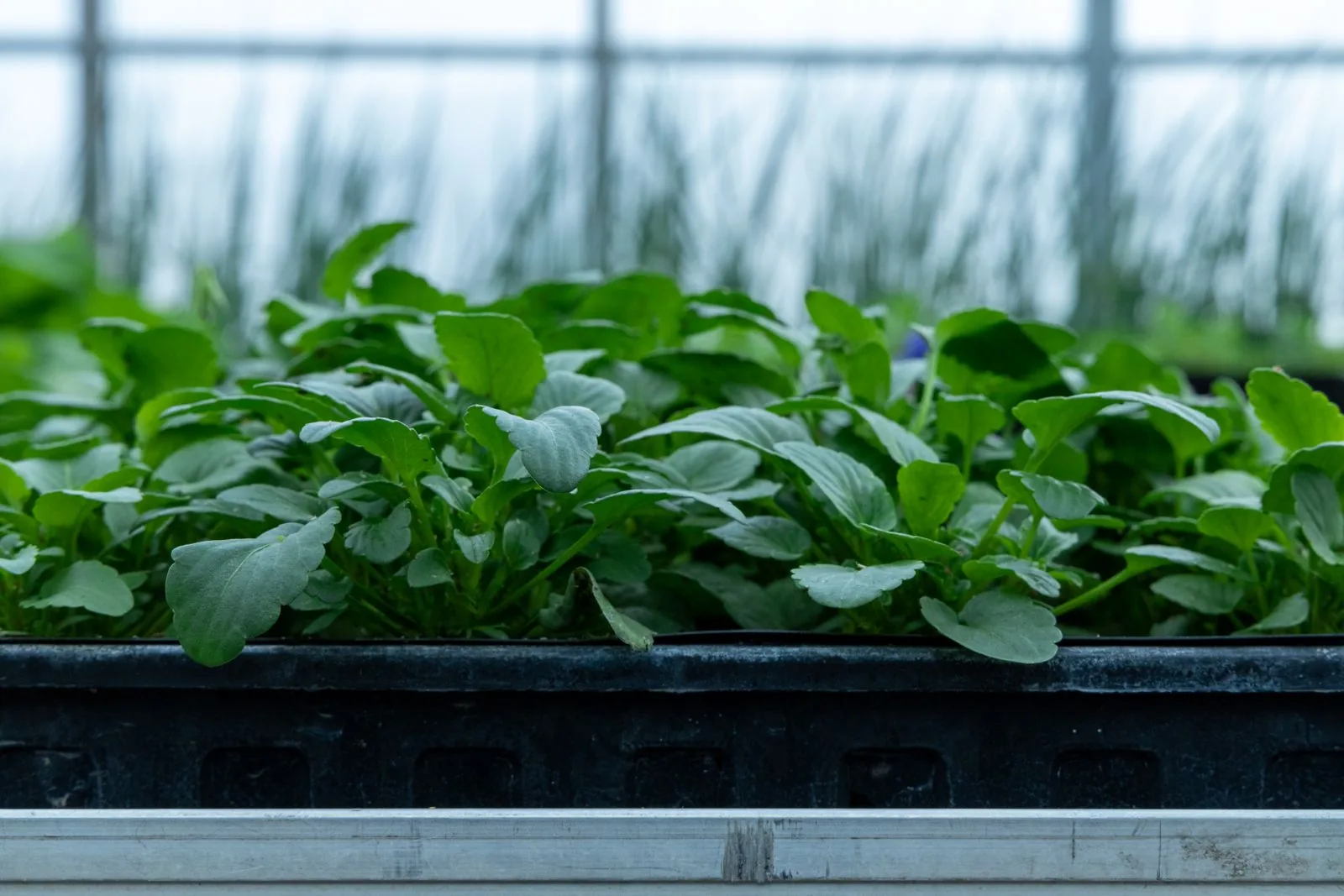
For one standard 1020 tray, the best seedling heat mat for most people is the VIVOSUN 10″ x 20.75″ Heat Mat and Digital Thermostat Combo: it runs on 20 watts, carries UL and MET certification, and the included probe thermostat stops the mat from overheating trays in a warm room. If you start four trays or more, skip the small mats and buy one 48″ x 20.75″ mat on a controller instead. Below we sort the options by how many trays you run, because that decides the right mat more than any brand feature does.
We may earn a commission when you buy through links on this page, at no extra cost to you. As an Amazon Associate we earn from qualifying purchases.
How we chose
We did not test these mats. We compared manufacturer specs from the Amazon listings (size, wattage, controller range, certifications), Amazon’s review summaries and rating counts as shown in November 2026, and germination temperature data from university extension services. We then did two pieces of math the product pages leave out: watts per square inch, so a small and a large mat can be compared on heating density, and the electricity cost of a typical six-week seed-starting run at the current US average residential rate.
Seedling heat mats compared
| Mat | Size | Watts | 1020 trays | Thermostat | Amazon rating (Nov 2026) |
|---|---|---|---|---|---|
| VIVOSUN Mat + Thermostat Combo | 10″ x 20.75″ | 20 W | 1 | Included, probe type | 4.5/5, 15,500+ ratings |
| VIVOSUN Mat (no thermostat) | 10″ x 20.75″ | 20 W | 1 | None | 4.6/5, 28,000+ ratings |
| BN-LINK Mat + Thermostat | 10″ x 20.75″ | 20 W | 1 | Included, 40-108°F | 4.5/5, 7,600+ ratings* |
| BN-LINK 48″ Mat + Thermostat | 48″ x 20.75″ | 105 W | 4 | Included, 40-108°F | 4.5/5, 7,600+ ratings* |
| Hydrofarm Jump Start MT10009 | 48″ x 20.75″ | 107 W | 4 | Sold separately (required per listing) | Not shown on the page we checked |
| AC Infinity SUNCORE H7 | 48″ x 20.75″ | Not listed | 4 | Included, digital | 4.2/5, 55 ratings |
*BN-LINK sells its 10″ and 48″ mats as size options on one listing, so the 7,679 ratings are shared across sizes. Tray count assumes a standard 10″ x 20″ 1020 tray placed crosswise.
Do you need a heat mat at all?
It depends on the crop and the room. Utah State University Extension says most seeds germinate readily at soil temperatures of 65-75°F, and cool-season crops such as broccoli, cabbage and spinach prefer 55-65°F. Those crops rarely need a mat in a heated house.
Peppers, tomatoes and eggplant are different. The UC Davis germination data republished by Oregon State University Extension shows peppers take 25 days to emerge at 59°F soil, 12 days at 68°F, and 8 days at 77-86°F. Tomatoes go from 14 days at 59°F to 6 days at 77-86°F. Potting mix indoors can also run up to 5°F cooler than the room air, according to the University of Minnesota Extension (cited in NMSU’s seed-starting guide), so a 65°F basement can mean 60°F soil. That is the situation a heat mat fixes.
The math the listings skip
Heating density
Every mat here with a published wattage puts out roughly the same heat per square inch. The 20 W single-tray mats work out to about 0.10 W per square inch (20 W over 207 sq in). The BN-LINK 48″ mat is about 0.11 W per square inch (105 W over 996 sq in), and the Hydrofarm about the same at 107 W. So a big mat does not warm a tray faster than a small one; it covers more trays from one plug and one controller.
Running cost
At the US average residential rate of 18.16 cents per kWh (EIA, August 2026, preliminary), a mat running nonstop for a six-week seed-starting season costs:
- 20 W single-tray mat: 20 kWh, about $3.70
- Four 20 W mats (four trays): 81 kWh, about $14.70
- 105-107 W four-tray mat: 106-108 kWh, about $19.20-$19.60
These are worst-case numbers. With a thermostat, the mat switches off whenever the soil reaches the set point, so the real figure is lower and depends on how cold your room is. Electricity is the cheap part either way; the decision is about tray count and control.
Best for one tray: VIVOSUN Heat Mat and Digital Thermostat Combo
Who it’s for: anyone starting one tray of peppers or tomatoes in a room that is either too cool or too variable. Who should skip it: people who already own a plug-in heat mat thermostat; buy the bare mat instead.
The mat is 10″ x 20.75″, draws 20 W and is rated IP67 for splashes and wipe-down cleaning (VIVOSUN says not to submerge it). VIVOSUN states it holds around 68-86°F and can reach 104°F at a 68-77°F room temperature, which is why the thermostat matters: without one, a warm room can push the tray past the range peppers like. It is UL and MET certified and holds 4.5/5 from 15,500+ Amazon ratings (November 2026).
- Pros: probe thermostat in the box; 20 W draw; IP67 surface; UL and MET certification; large rating pool.
- Cons: Amazon’s review summary reports mixed durability, with some owners saying the mat failed within a year; the combo costs more than a bare mat if you already have a controller.
Best budget mat: VIVOSUN Seedling Heat Mat (no thermostat)
Who it’s for: growers with a cool room (60-65°F) where a fixed boost cannot overshoot, or anyone adding a second tray to a thermostat they already own. Who should skip it: anyone starting seeds in a warm room or right under hot lights.
This is the same 10″ x 20.75″, 20 W, IP67, UL- and MET-certified mat as the combo above, sold without the controller and with a carrying bag for storage. It is the most-rated mat in the category at 4.6/5 from 28,000+ Amazon ratings (November 2026). Amazon’s review summary says many owners saw seeds sprout in under a week, while others found it only raised soil temperature by 8-10 degrees. That spread makes sense for a mat with no control: its result depends entirely on the room it sits in.
- Pros: the lowest-cost way to add bottom heat; huge owner base; works with any standard plug-in thermostat later.
- Cons: no temperature control; reliability reviews are mixed, with some reports of failure within a week.
Best thermostat range: BN-LINK Heat Mat with Thermostat Controller
Who it’s for: growers who want the controller to outlast the mat and run other heating gear later. Who should skip it: buyers who want the largest rating pool for this exact size.
The 10″ x 20.75″ mat draws 20 W, is IP67-rated and ETL listed, and BN-LINK says it holds around 70-85°F. The controller is the stronger half: a 40-108°F set range, a 4.92 ft probe, a 3-button interface and a 1,000 W (8.3 A) maximum load, so it can later run a larger mat or several smaller ones. BN-LINK backs it with a 12-month warranty. Ratings show 4.5/5 from 7,679 Amazon ratings, shared across all sizes on the listing (November 2026).
- Pros: wide controller range; long probe reaches into a tray on a shelf; 1,000 W load leaves room to expand; 12-month warranty.
- Cons: Amazon’s review summary lists mixed heat distribution and some reports of the mat not reaching the set temperature; durability is also mixed, with some mats lasting only a few months.
Best for four trays: BN-LINK 48″ x 20.75″ Heat Mat with Thermostat
Who it’s for: anyone filling a 4 ft shelf with four 1020 trays. Who should skip it: growers who start different crops at different temperatures, since one mat means one set point for every tray.
One 105 W mat covers the footprint of four standard trays placed crosswise, and the same 40-108°F, 1,000 W controller comes in the box. Compared with four separate small mats, you get one cord and one probe instead of four, at a heating density (about 0.11 W per square inch) that matches the small mats. It is ETL listed and IP67-rated per the listing.
- Pros: one plug and one controller for four trays; controller included; same density as the small mats.
- Cons: one probe reads one spot, so the far end of the mat can run warmer or cooler than the probe tray; the rating pool is shared with the smaller sizes, so it says little about this size alone.
Best for expanding a shelf: Hydrofarm Jump Start MT10009
Who it’s for: growers planning to grow beyond one shelf. Who should skip it: anyone who wants an all-in-one box.
Hydrofarm rates this mat at 107 W, UL certified, and says it warms the root zone 10-20°F above room temperature. Its distinguishing feature is expansion: per the listing, you can daisy-chain up to five units (this mat plus four MTMDA add-on mats) through waterproof connectors, and Hydrofarm describes the construction as 50% thicker than other brands. The listing title says 48″ x 20″ while the description says 48″ x 20.75″, so measure your shelf with the larger figure to be safe.
- Pros: UL certified; daisy-chains to five mats; thicker build per the maker; 6 ft cord.
- Cons: needs a separate thermostat (Hydrofarm’s listing calls its MTPRTC controller required); stock was low on Amazon when we checked; no rating was visible on the page we checked.
Also worth a look: AC Infinity SUNCORE H7
This 48″ x 20.75″ mat comes with a digital controller that shows the mat’s real-time temperature, uses far-infrared film and is UL and MET certified with an IP67 quad-layer PVC surface. It sits behind the BN-LINK 48″ here for one reason: at 4.2/5 from only 55 Amazon ratings (November 2026), there is far less owner history to judge durability, which is the weak point across this category. AC Infinity also does not list the wattage on the listing we checked. If you already use AC Infinity grow gear, it is a reasonable choice.
Which heat mat fits your setup
- One tray, cool room (around 60-65°F): the bare VIVOSUN mat is enough. A 10-20°F boost lands near the 75-85°F range tomatoes and peppers like.
- One tray, warm room (70°F or more) or under grow lights: buy a mat with a thermostat. A 20°F boost on top of a 72°F room can push soil past 90°F, where tomato emergence slows again (9 days at 95°F in the OSU table).
- Two or three trays: buy one thermostat and two or three bare mats on a power strip plugged into the thermostat outlet. Check the controller’s load rating first; three 20 W mats are far below 1,000 W.
- Four trays on a 4 ft shelf: one 48″ mat with a controller (BN-LINK 48″ or AC Infinity H7).
- More than one shelf: the Hydrofarm system, which daisy-chains, plus one controller per shelf if shelves sit at different temperatures.
- Cool-season crops only (lettuce, spinach, brassicas): you probably do not need a mat. Spend the money on light instead; our guide to the best grow lights for seedlings covers that.
Using a heat mat without cooking seedlings
Put the thermostat probe in the soil of a center cell, about where the seeds sit, not on the mat surface. A probe lying on the mat reads the hottest spot and switches the mat off before the soil is warm. UMass Amherst Extension says tomato seeds germinate best at 75°F and pepper seeds at 85-90°F, so set the controller to match the crop on that tray.
Take trays off the heat once most seeds have sprouted. UMass advises removing tomato flats from bottom heat as soon as there is any sign of germination, because warm roots plus warm air make stretched, weak seedlings. A humidity dome on a heated tray also traps moisture, which is the condition fungus gnats breed in, so vent the dome daily and pull it after emergence. Use trays with solid bottoms rather than mesh ones; our seedling tray guide covers which ones fit a 10″ x 20″ mat.
FAQ
How much warmer does a seedling heat mat make the soil?
Hydrofarm and Fast-gro both state their mats warm the root zone 10-20°F above room temperature. Amazon’s review summary for the VIVOSUN bare mat includes owners reporting only an 8-10°F gain, so expect the lower end in drafty spots.
Can I leave a heat mat on 24 hours a day?
Germination mats are meant to run around the clock until seeds sprout, and a thermostat keeps that from overshooting. Utah State University Extension recommends pairing heat mats with a thermostat for that reason. Keep the mats indoors and only put seed trays on top.
Should the heat mat go under or on top of the tray?
Under. The mat sits flat on the shelf and the solid-bottom tray goes on top; the heat moves up into the root zone.
When should I turn the heat mat off?
Once most seeds in the tray have emerged. After that, seedlings grow sturdier at cooler temperatures: UMass lists 75°F days and 65°F nights for pepper seedlings.
If your seed-starting room sits under 65°F and you grow peppers, a thermostat-controlled mat can cut emergence from about 25 days to about 8, by the UC Davis numbers. For a full setup, see our seed starting systems guide.
Sources
- Amazon listing ASIN B016MKY7C8 (VIVOSUN combo): specs via Amazon Creators API; rating from amazon.com/clp page, checked 2026-11-28
- Amazon listing ASIN B00P7U259C (VIVOSUN mat): specs via Creators API; rating and review summary from amazon.com/clp page, checked 2026-11-28
- Amazon listing ASIN B08BWZKTM9 (BN-LINK 10″ combo): specs via Creators API; review summary from amazon.com/clp page, checked 2026-11-28
- Amazon listing ASIN B08XW9CGST (BN-LINK 48″ combo): specs via Creators API; rating from product page, checked 2026-11-28
- Amazon listing ASIN B000E3B8XG (Hydrofarm MT10009): specs via Creators API and product description, checked 2026-11-28
- Amazon listing ASIN B0D9516SS7 (AC Infinity SUNCORE H7): specs via Creators API; rating from related-item listing, checked 2026-11-28
- Amazon listing ASIN B06Y65NVK7 (Fast-gro 11″ x 48″): 10-20°F above ambient claim, Creators API, checked 2026-11-28
- Oregon State University Extension, Soil temperature conditions for vegetable seed germination (J. F. Harrington, UC Davis): extension.oregonstate.edu, checked 2026-11-28
- Utah State University Extension, Starting Vegetable Seeds Indoors III: Germination (2025): extension.usu.edu, checked 2026-11-28
- UMass Amherst CAFE, Vegetable Bedding Plant Production and Pest Management: umass.edu, checked 2026-11-28
- NMSU Bernalillo County Extension, Indoor Seed Starting (citing University of Minnesota Extension on potting mix temperature): desertblooms.nmsu.edu, checked 2026-11-28
- US EIA Form EIA-861M, average residential price August 2026 (18.16 cents/kWh, preliminary), as reported at energy.statnorth.us, checked 2026-11-28